Burgundy Stone

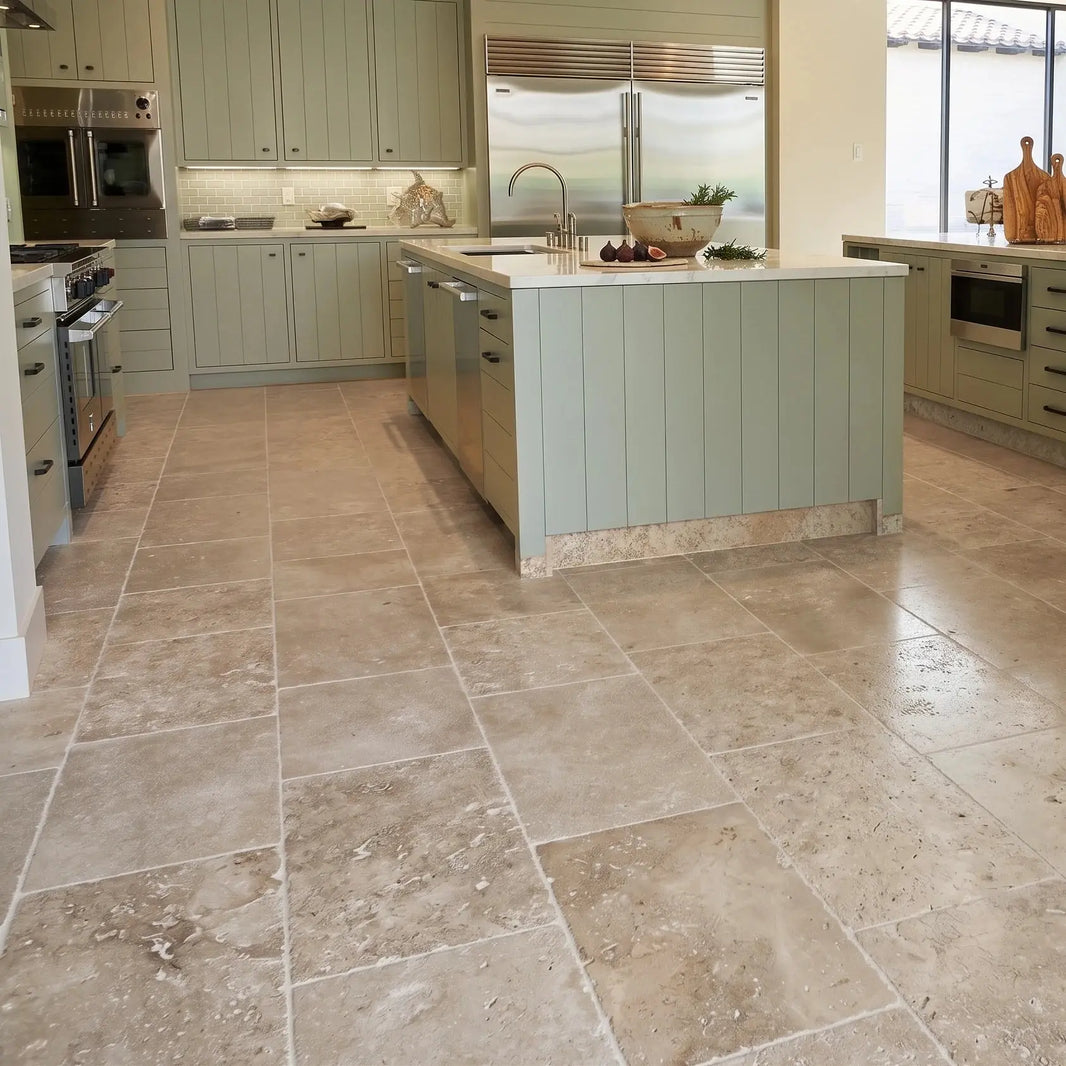
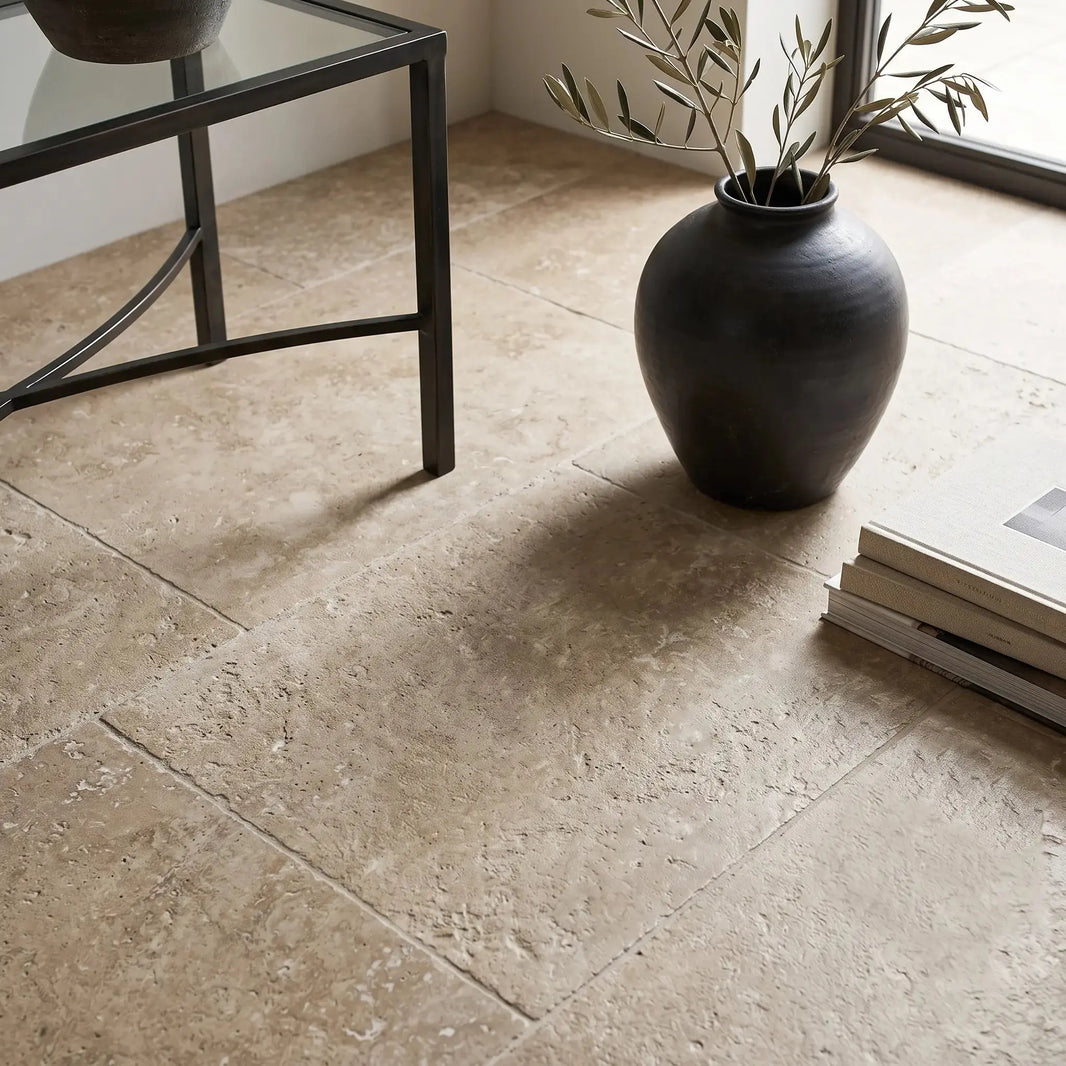
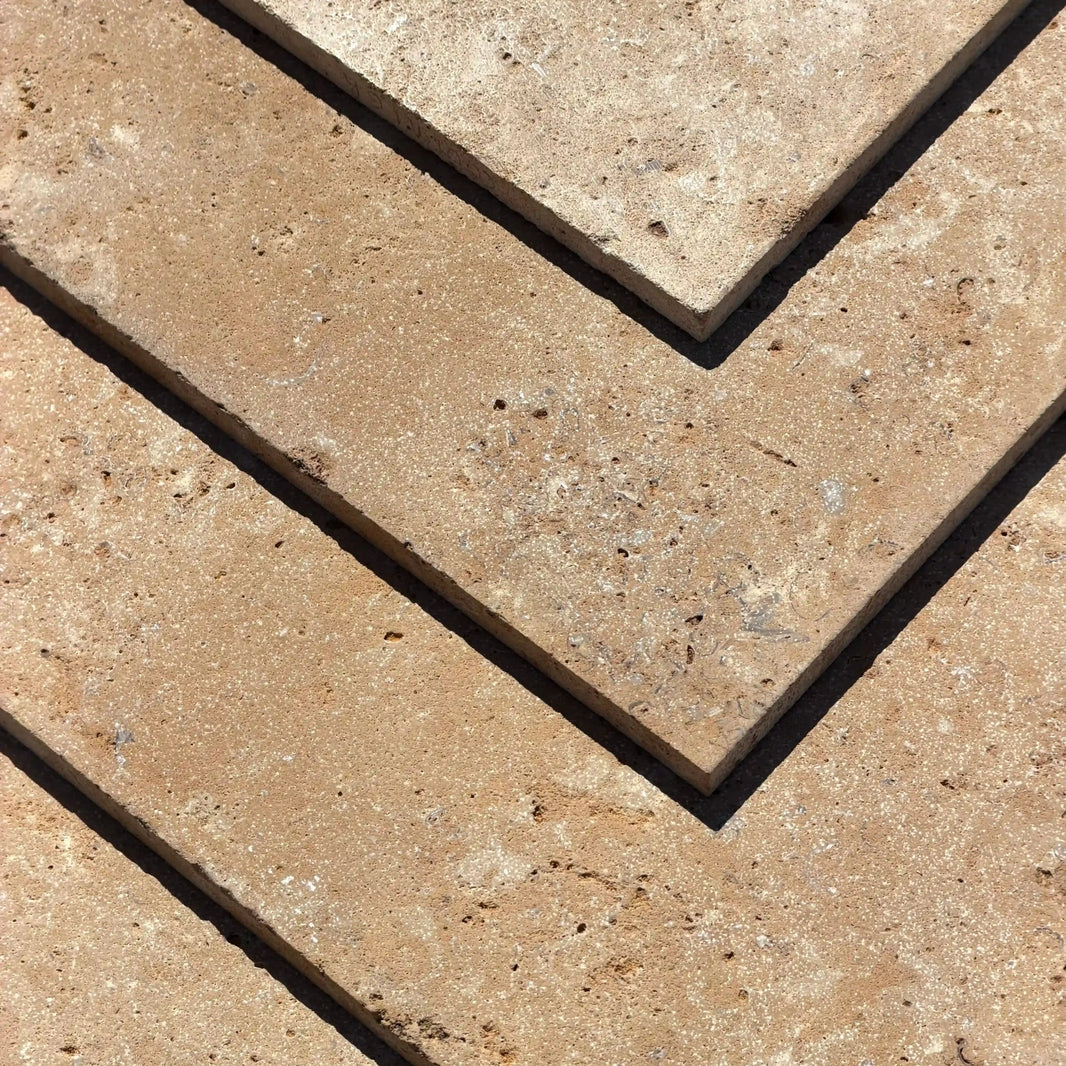
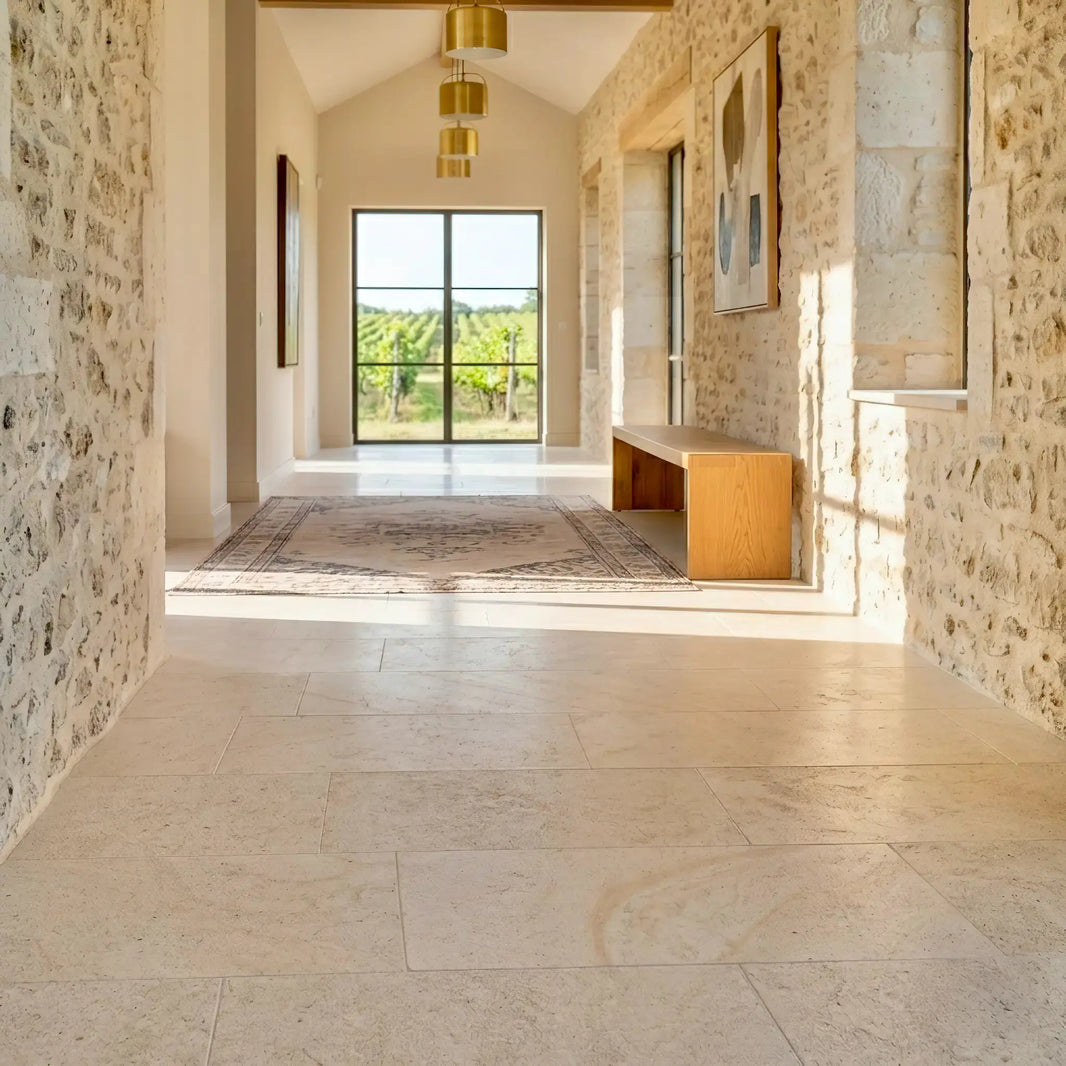
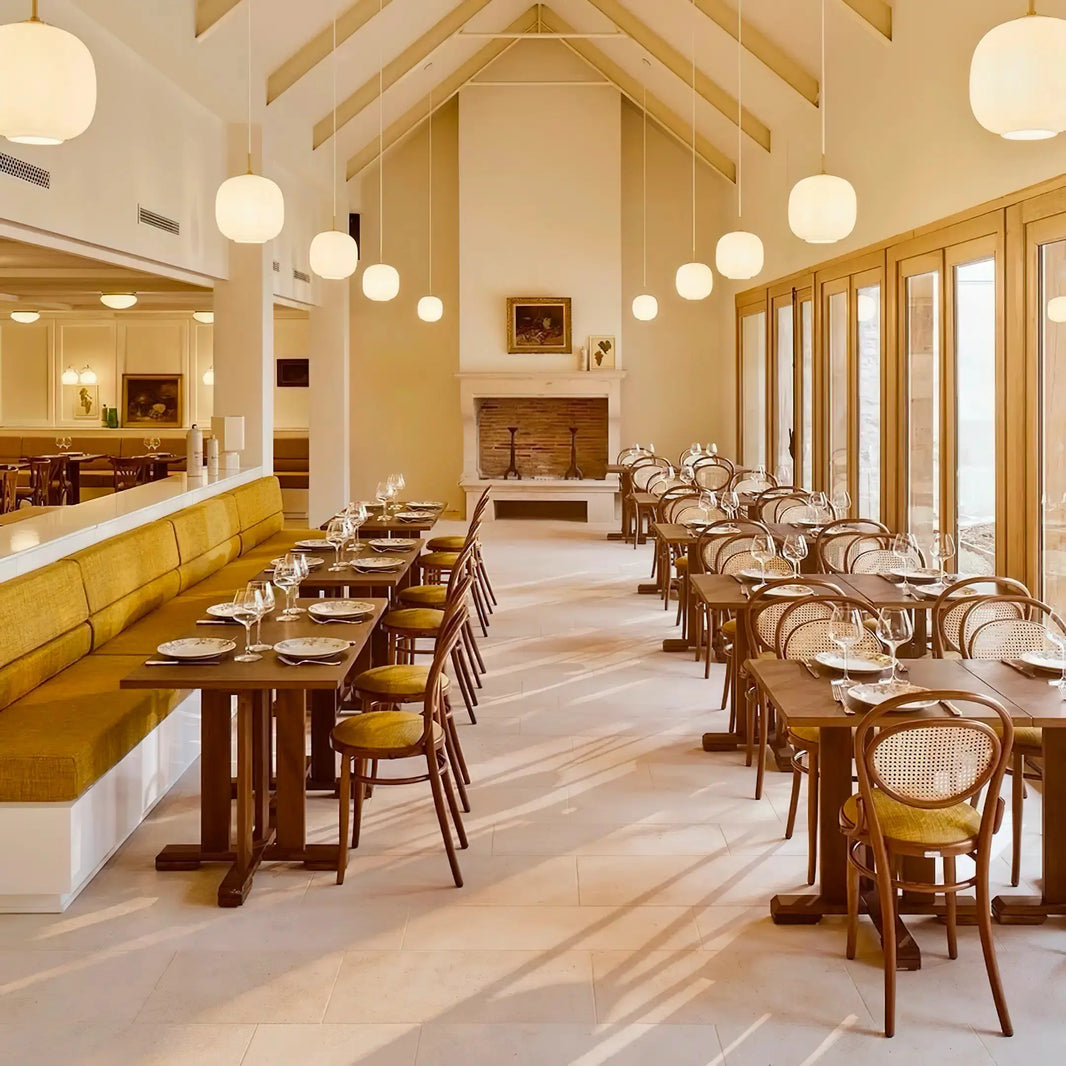
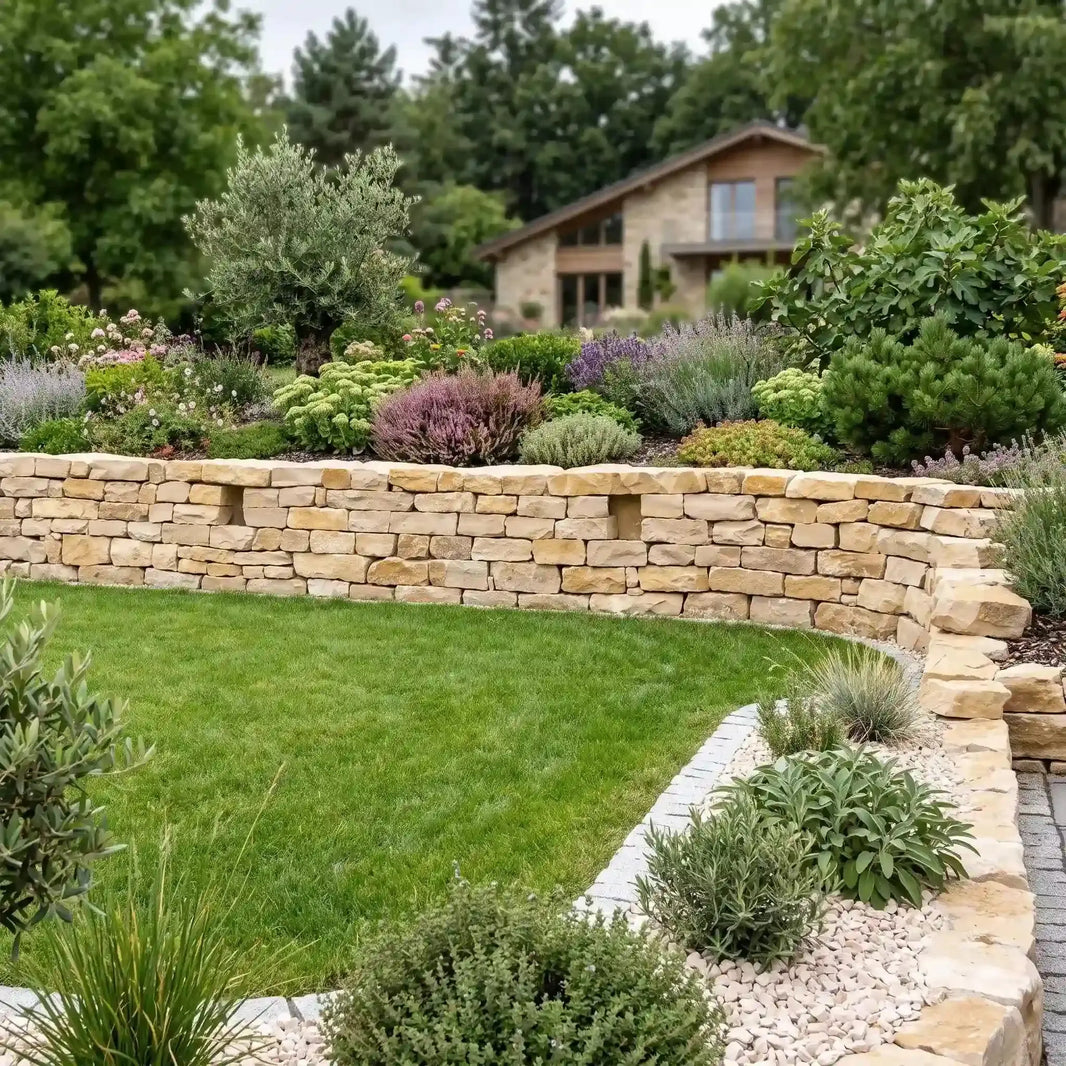
Burgundy stone is a natural French limestone, renowned for its beauty and strength. Used since antiquity, it adorns floors, walls, terraces and swimming pools, both indoors and outdoors. Its beige hues and durability make it a noble material, suitable for modern or traditional projects, with tailor-made finishes.

ALL YOU NEED TO KNOW ABOUT BURGUNDY STONE

Far more than a simple covering, Burgundy stone is an exceptional choice for your landscaping projects. Sourced from French quarries certified with a Protected Geographical Indication (PGI), it stands out for its robustness, warm hues, and meticulous finish, bringing authenticity to every space. Whether for paving, stairs, coping, or wall cladding, its thickness and texture offer superior quality, far beyond standardized stones.

At Minéral, each block is rigorously selected and processed in our factory in Burgundy, guaranteeing a durable, easy-to-install stone perfectly suited to your needs. Order your Burgundy stone today, available in stock or custom-made, for a natural and long-lasting material, suitable for both your interior and exterior.

Der Burgund-Stein ist ein edles und symbolträchtiges Material, das ausschließlich in der gleichnamigen Region im Herzen des französischen Kulturerbes abgebaut wird. Es handelt sich um einen Naturstein, der seit der Antike wegen seiner Robustheit, seiner Langlebigkeit und seiner warmen Farbnuancen geschätzt wird, die von hellem Beige bis zu goldenem Braun je nach Steinbruch reichen.

Wir bearbeiten diesen Stein seit über 20 Jahren in unseren eigenen Standorten im Châtillonnais-Becken (Côte d’Or) und arbeiten mit Partnerschaften mit den historischen Steinbrüchen von Comblanchien, Massangis und Semond zusammen.

Er ist bekannt für:

  • Seine weiche und homogene Textur, ideal für glatte oder gealterte Oberflächen.
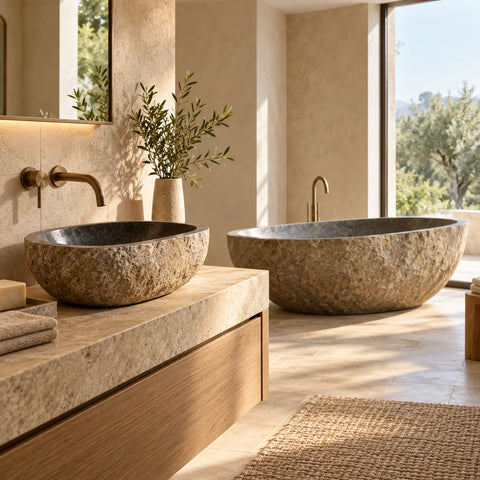
  • Seine leichte Bearbeitbarkeit, die die Herstellung von maßgeschneiderten Stücken ermöglicht: Treppenstufen, Waschbecken, Arbeitsplatten, Brunnen, usw.
  • Seine außergewöhnliche Langlebigkeit, mit vielen Bauwerken, die mehrere Jahrhunderte alt sind und sich in einwandfreiem Zustand befinden.
  • Seine IGP-Zertifizierung "Indication Géographique Pierre de Bourgogne", die unsere Fabrik SIB PIERRE DE BOURGOGNE besitzt: eine Garantie für Herkunft, Rückverfolgbarkeit und lokales Know-how.

Man findet ihn in vielen Architekturprojekten:

  • Terrassenbeläge oder Innenhöfe
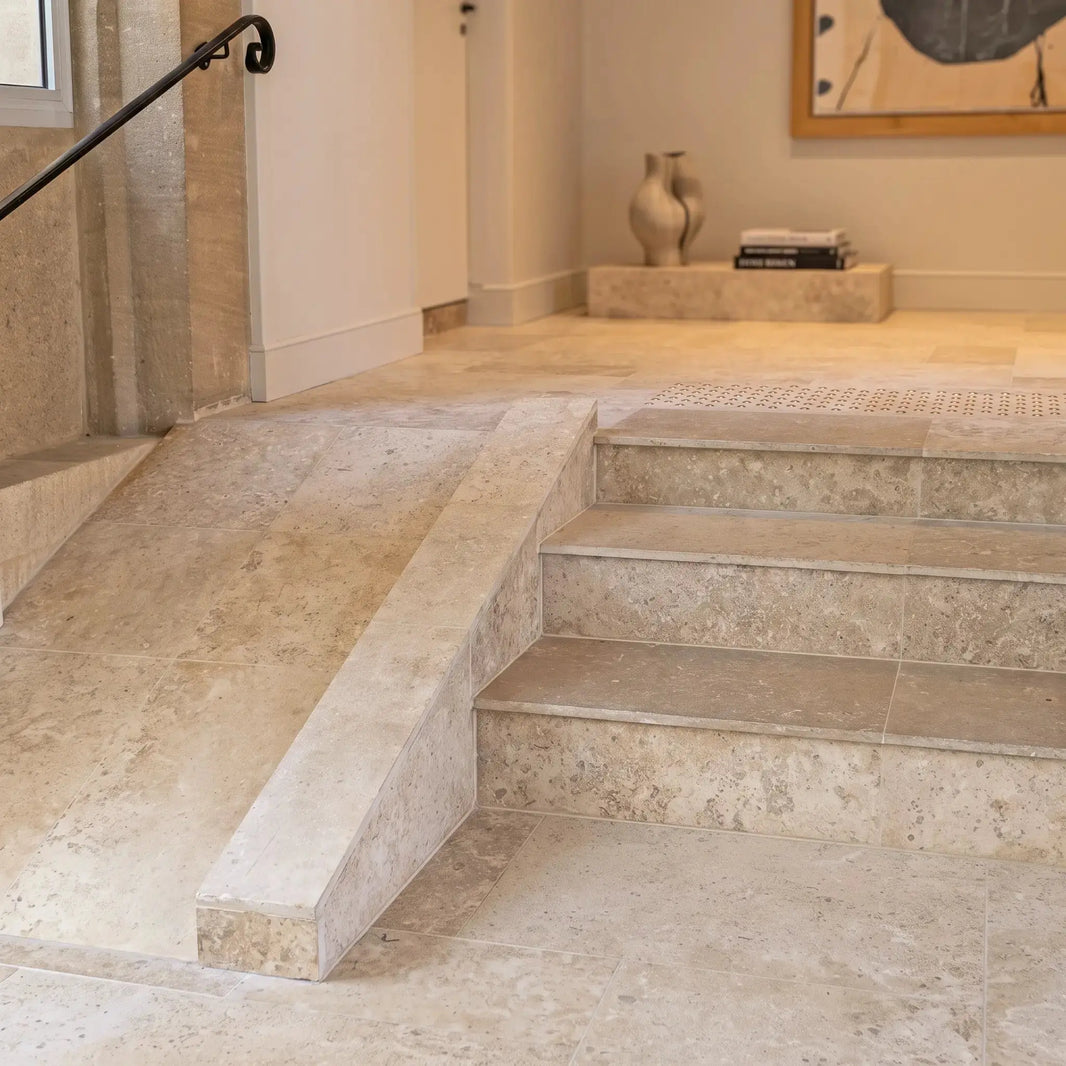
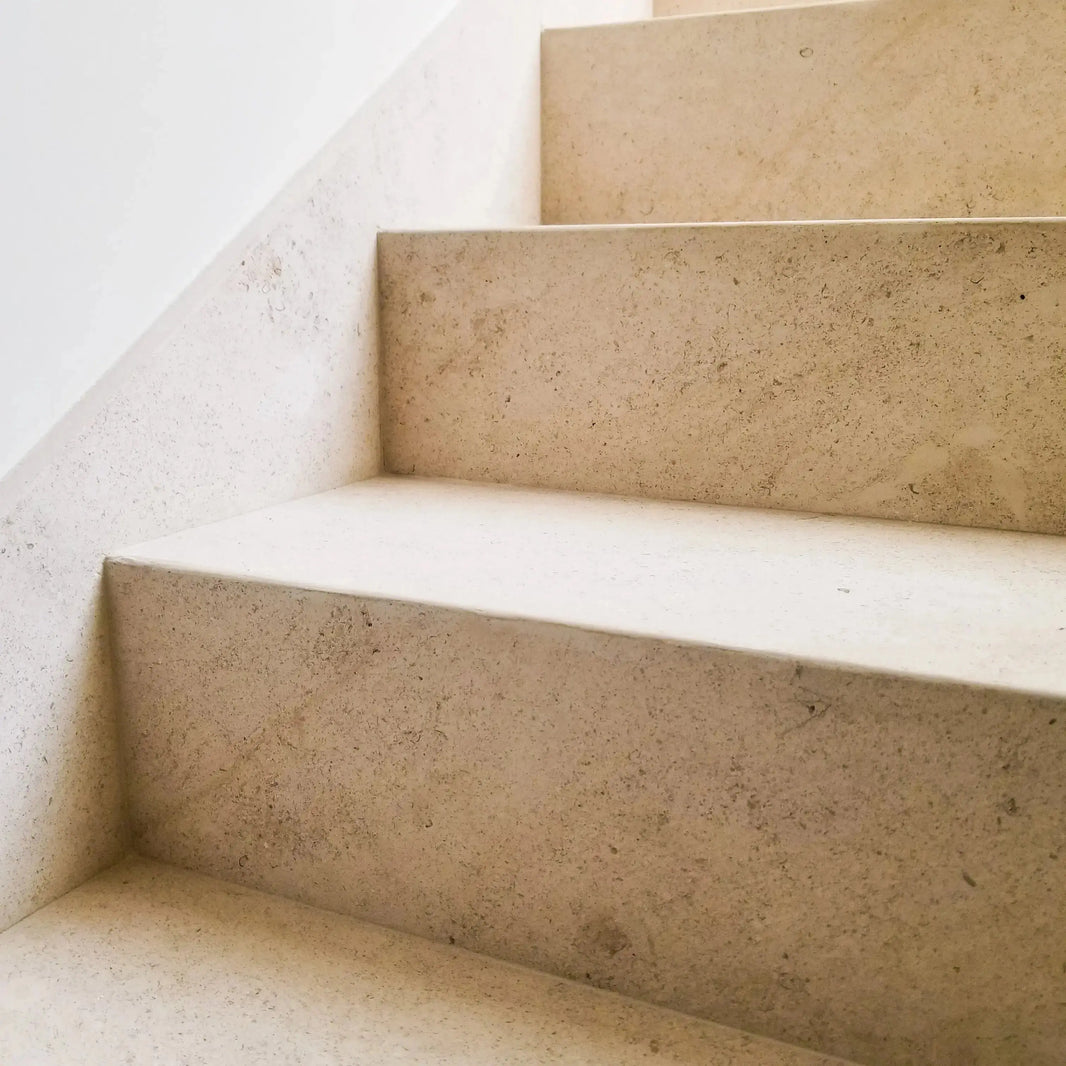
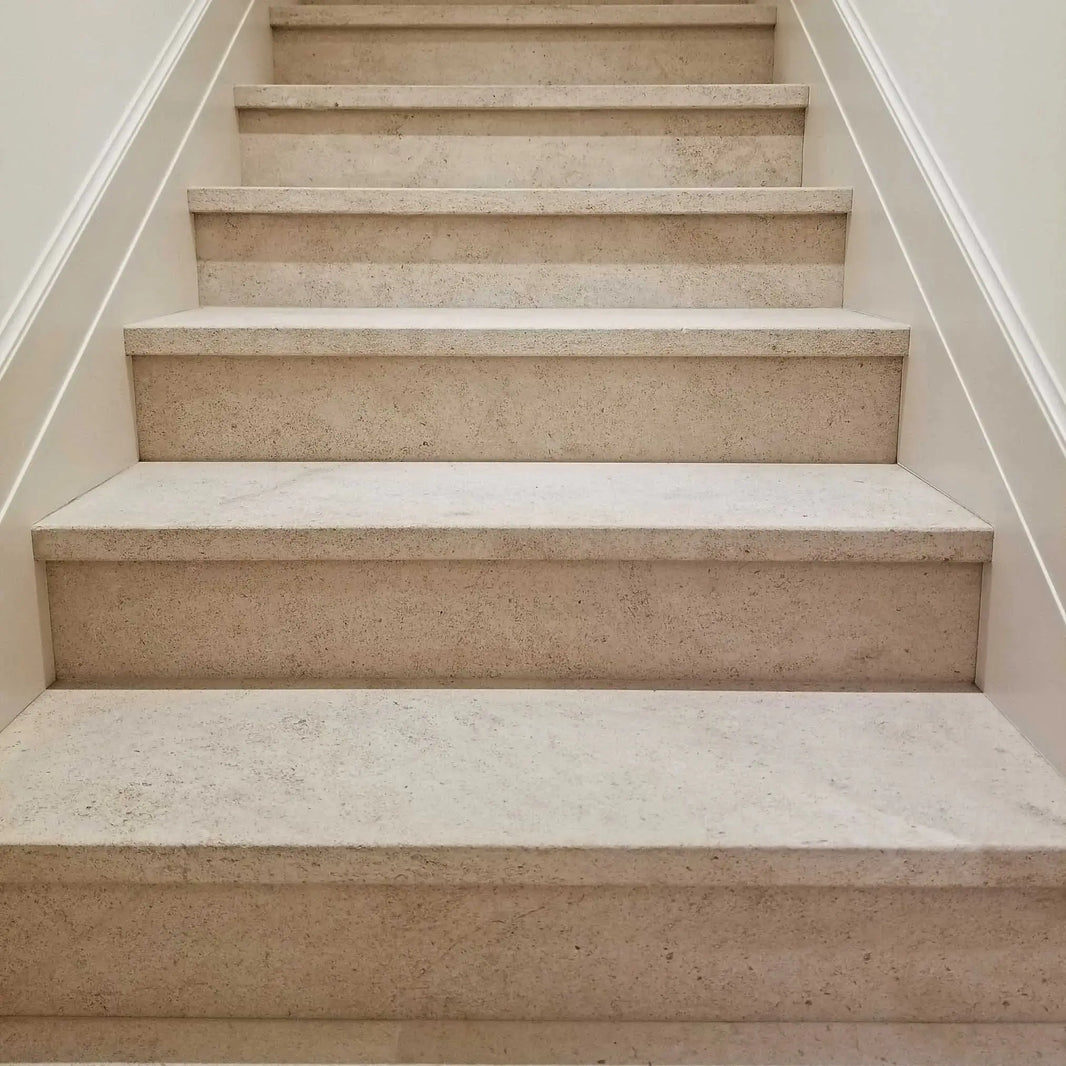
  • Treppen
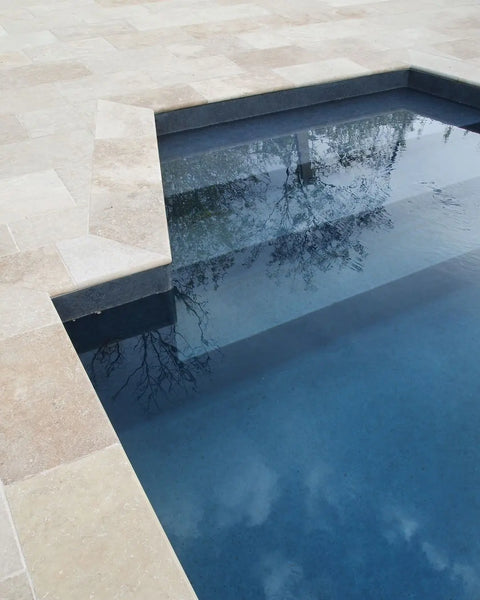
  • Poolumrandungen und rutschfeste Poolkanten
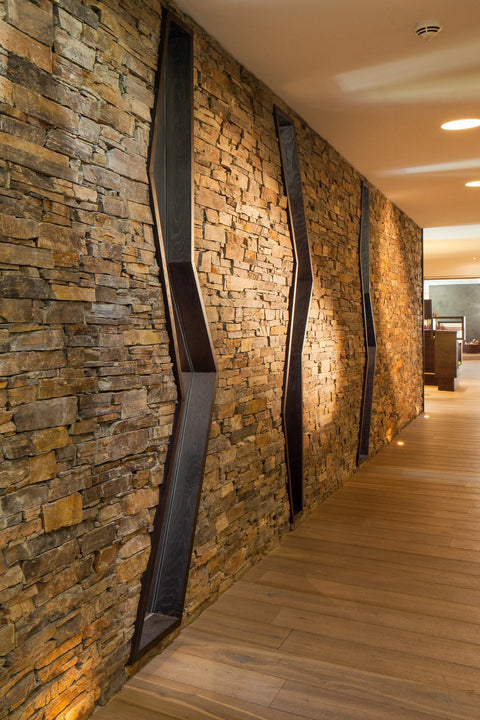
  • Edle und zeitlose Wandverkleidungen
  • Restaurierung von denkmalgeschützten Gebäuden oder historischen Monumenten

➡︎ Es ist eine französische Ressource, natürliche, dauerhafte, recycelbare, die in einem ökologisch verantwortungsvollen und lokalen Ansatz steht.

The "Burgundy white stone" is not a distinct stone, but a premium selection from the Burgundy stone quarries. It is therefore neither an official name nor a single origin, but a specific sorting of the lightest and most homogeneous beds extracted in this region.

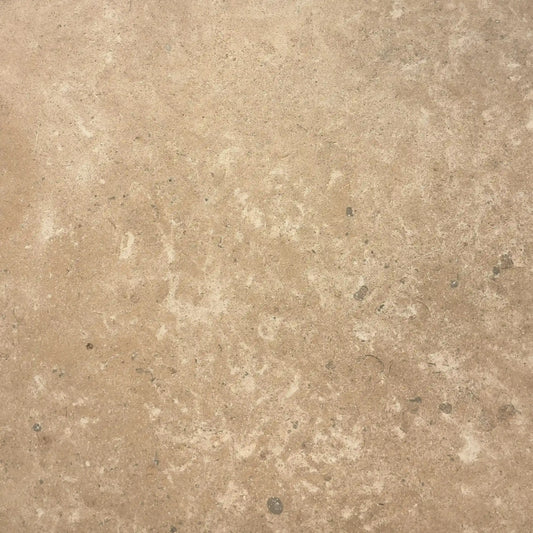
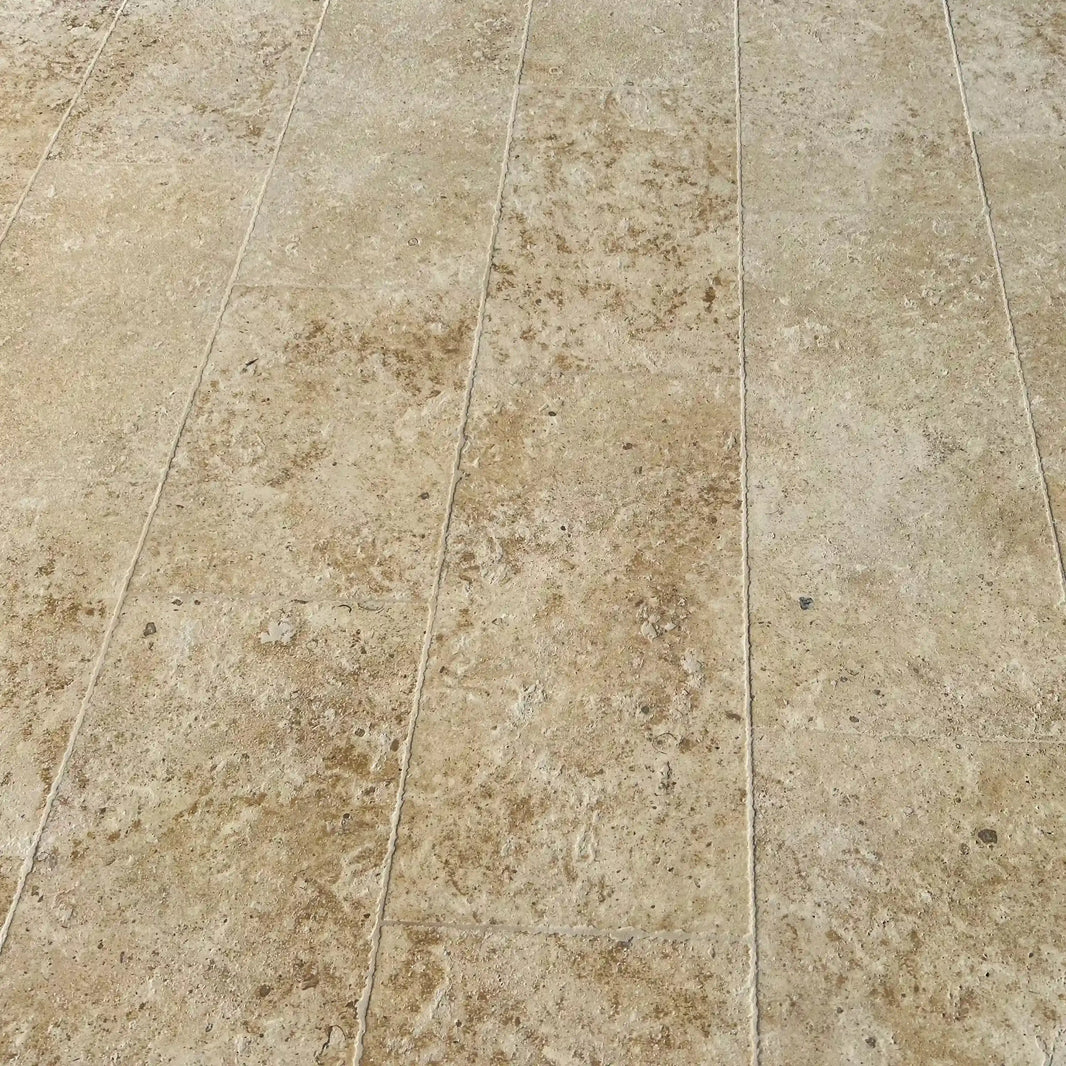
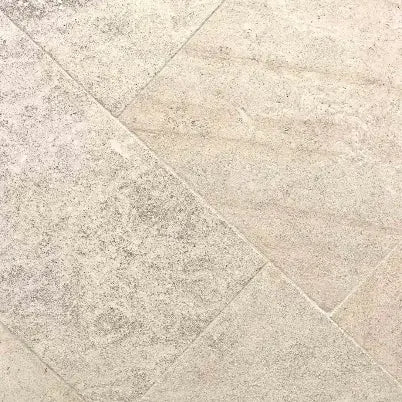
The natural shades of Burgundy offer a light palette, ranging from golden beige to off-white, including ecru or slightly orange tones. At each source site, the extracted blocks are sorted according to their veining, uniformity and color. It is the most uniform, least veined and brightest beds that are marketed under the common name of “white stone”.

Burgundy white stone, often extracted from the sites of Semond, Lanvignes, Corton or Massangis, is a variety highly appreciated for its light, homogeneous and luminous finish. This rock, with a light beige to off-white shade, brings timeless elegance, in covered spaces as well as in open spaces.

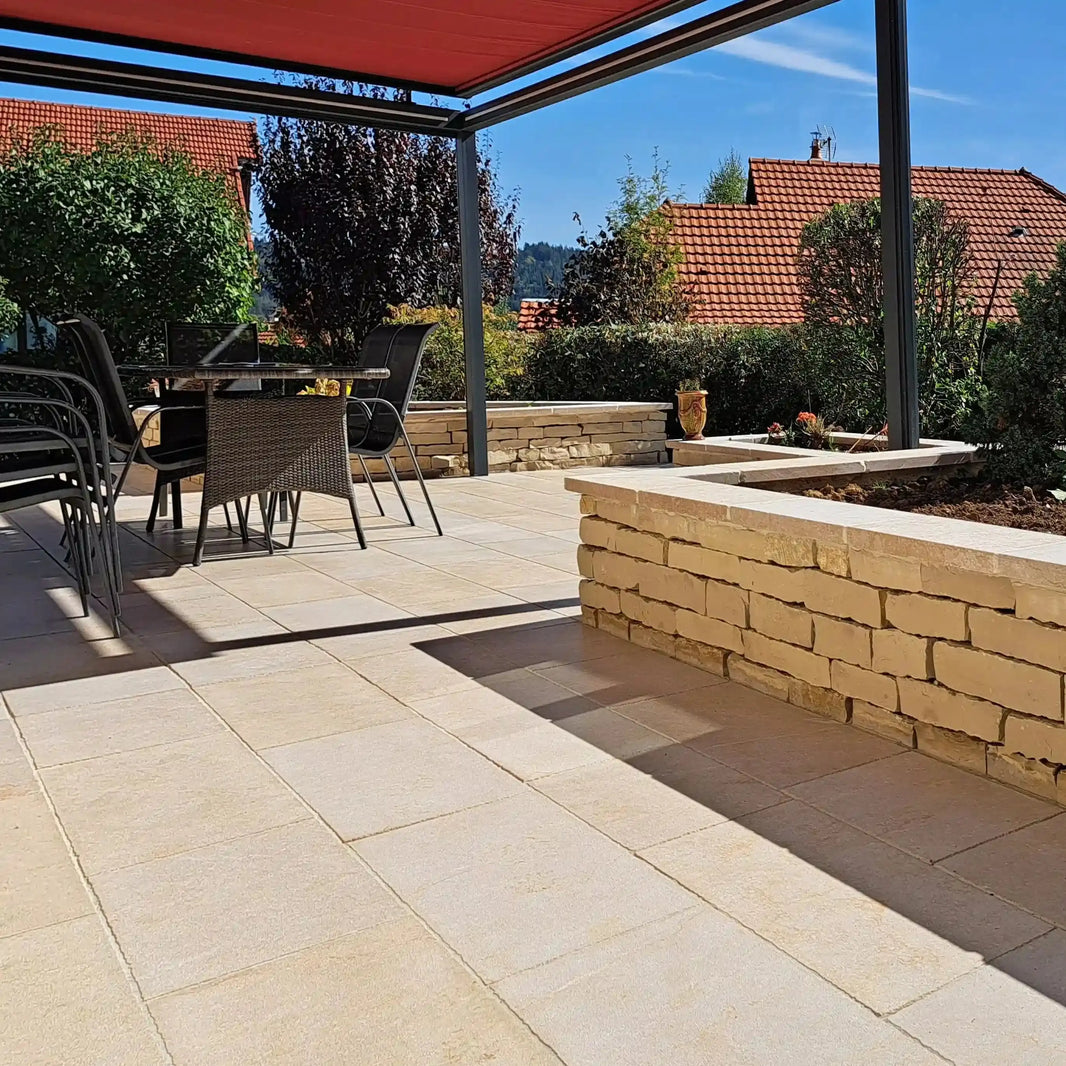
It is frequently found as terrace slabs, pavers, or wall tiles, notably on terraces, around swimming pools, or in high-end bathrooms. Thanks to its stability and noble appearance, it fits perfectly into contemporary or traditional architectural projects.

➡︎ At Minéral, the blocks are rigorously selected from extraction, then processed in our SIB PIERRE DE BOURGOGNE factory, a player certified for the Protected Geographical Indication "Pierre de Bourgogne". This official certification guarantees regional origin, traceability and compliance with local know-how, validated by strict specifications.

  • Available finishes: honed, aged, brushed
  • Made-to-measure dimensions according to the layout plan
  • Possible projects: pool coping, slabs, solid staircases, basins, countertops, wall cladding
  • Variable availability depending on beds and batches: contact us for a quotation or personalized advice

➡︎ Choosing the Burgundy white stone means opting for local excellence, the result of demanding selection and know-how passed down from generation to generation.

Burgundy stone is a sedimentary limestone quarried exclusively in Bourgogne-Franche-Comté, with mechanical properties suited to all types of use.

It stands out for:

  • Its high density: from 1.9 to 2.7 t/m³ depending on the basin, guaranteeing excellent durability over time
  • Its flexural strength: between 6 and 25 MPa, depending on the variety (Comblanchien, Massangis, Semond, Lanvignes, etc.)
  • Its low porosity: as low as 0.5% for certain stones, making it a naturally suitable material for ornamental use, even without treatment
  • Its load-bearing capacity: some Burgundy pavers, laid on a concrete screed, can be used in light vehicle-accessible areas

➡︎ These values come from the IGP "Pierre de Bourgogne" specifications, validated by standardised tests (BF B-10-601) covering:

  • Density
  • Porosity
  • Flexural strength

All our Burgundy paving is compatible with underfloor heating, thanks to the gentle heat diffusion offered by this natural resource.

The slabs can be sawn to 1.2 to 1.8 cm thickness for interiors, or in greater thickness for exteriors and solid staircases.

Characteristics by basin (official IGP extract):

  • Côte (Comblanchien, Corton...) :
    Density: 1.9–2.7 t/m³ | Porosity: 0.5–6% | Strength: 13–17 MPa

  • Châtillonnais :
    Density: 2.1–2.6 t/m³ | Porosity: 5–22% | Strength: 5–15 MPa

  • Tonnerrois (Massangis...) :
    Density: 2.1–2.6 t/m³ | Porosity: 6–21% | Strength: 6–25 MPa

  • Nivernais :
    Density: 2.2–2.5 t/m³ | Porosity: 9–15% | Strength: 4–13 MPa

  • Mâconnais :
    Density: 2.4–2.7 t/m³ | Porosity: 0.5–2% | Strength: 10–20 MPa

We work exclusively with blocks sorted on site, extracted from our own quarries or certified partners. Each batch is inspected and machined in our factory SIB Pierre de Bourgogne, according to strict quality standards and compliance with IGP.

  • Technical data sheets available on request
  • Samples sent within 48 hours
  • Technical support for architects, tilers or project managers

Thanks to our expertise, we work with both of these resources. Our legitimacy comes from the fact that we directly process Burgundy stone in our own IGP-certified factory, in Bourgogne-Franche-Comté. Every day, we compare these 2 materials in the field: in the context of renovations, with architects, or during export deliveries to the United States or England, our perspective is pragmatic, technical, and based on real-world use. The aim is not to pit these two types against each other, but to understand what truly sets them apart.

1. Origin, certification and traceability: Burgundy stone vs travertine

The Burgundy stone is a French, local raw material, certified IGP (Protected Geographical Indication). This implies a precise specification, validated by the INAO: extraction, processing and shaping must take place entirely in Bourgogne-Franche-Comté. Each block is monitored, traced, and comes from recognized sites (Comblanchien, Massangis, etc.). It is not a mere trade name: it is a guarantee of origin and expertise.

Travertine, on the other hand, is not subject to such a requirement. It can come from Italy or Turkey, and be sold under the same name regardless of its processing conditions. In Turkey, some sites are a hundred times the size of those in Burgundy. It follows an industrial logic, with enormous volumes, prices driven down, and very little traceability.

2. Aesthetics and structure

Travertine stands out for its natural cavities: it is a stone formed in freshwater environments, which creates bubbles trapped in the material. These cavities are sometimes left visible, sometimes filled with resins, depending on the desired look. It is a very decorative, textured stone, with a real material effect.

Burgundy stone has no cavities. It offers a wide variety of textures depending on the extraction sites and the beds: some very even, others more cloudy, with fossilized shells, light veining, or tighter grains. It is a more sober stone in appearance, more noble in its finish, which suits all styles without ever going out of fashion: rustic, classic, or ultra contemporary.

3. Uses and positioning

Turkish travertine became widespread in France from the 2010s onwards. Enormous production volumes and modern mechanical processes have driven prices down. Result: this stone has become accessible to everyone, even for projects with controlled budgets, notably thanks to opus or small-size cuts. It can be found in most large DIY stores.

Burgundy stone, by contrast, is not a mass-market product. These are small production sites, with more limited yields, rigorous sorting, and French processing. Every square meter is optimized. This approach recalls the great Burgundy wine crus: small yields, targeted excellence, no compromise. It is a selection of value, not of volume.

4. And what about quality?

There is no stone that is “better” than another.

There are exceptional Italian travertines at more than 500 €/m², and very affordable Turkish alternatives at less than 20 €/m². Likewise, some Burgundy stones are very dense, at 1% porosity, others softer and more porous. Some resist frost, others do not. It all depends on the chosen material, the finish and the use.

We say it clearly: it is pointless to determine “the best” between these two options. Each situation deserves a specific comparison.

5. Why we choose Burgundy stone

Because we know it inside out. Because we process it ourselves in our factory in Burgundy. Because we know what its light beds, its discreet veining and its tight grains are worth. Because we believe in the value of French craftsmanship, in short supply chains, in the nobility of a material that has crossed the centuries. And because every day we see American architects, London decorators or demanding clients rediscover this stone, and adopt it.

Burgundy stone is a stone of heritage, used in the finest French buildings, and today present in contemporary projects internationally.

Conclusion:

Travertine is a good option: Affordable. Decorative. Industrial.

Burgundy stone is something else. It is a unique stone. Traceable. Heritage. Authentic. And that is exactly why we work it, why we defend it, and why we offer it to those who want a true natural stone, in the noble sense of the term.
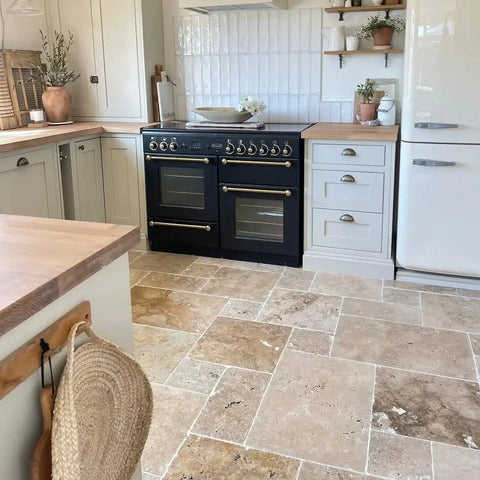
Maintenance is simple, provided you follow a few basic rules. Like any limestone, Burgundy stone is sensitive to acidic products: forget vinegar; standard descalers or any overly acidic detergent should also be avoided. Use only mild cleaners, such as Lithofin Wash & Clean, or neutral solutions specially designed for natural stones.

Indoors, regular cleaning with clear water or with a suitable cleaner is enough in most cases. To extend protection, re-waterproofing every 3 to 7 years is recommended (depending on use: protected or exposed areas, full south or north exposure).

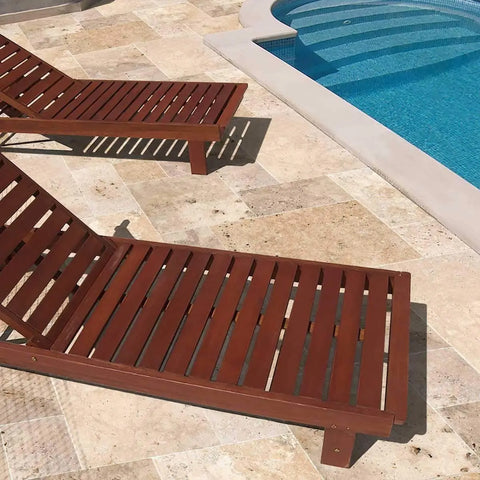
Outdoors, a water-repellent treatment is strongly recommended, especially for terraces, pool surrounds or pool coping. It protects against stains (water, oil, wine, vegetation) and limits the build-up of dirt. We recommend, for example, Lithofin Fleckstop W, tested and approved on our stones in the workshop.

➡︎ We offer ready-to-install elements, or maintenance kits and protection kits suited to each use. Our experts will advise you on the right actions at the right time.

Choosing the right Burgundy stone means combining aesthetics, functionality and durability. Here are the key criteria to consider:

  1. Place of use
  • Indoors: favour less rough surfaces (honed, new medieval, aged, etc.), pleasant to the touch and easy to clean.
  • Outdoors: opt for sandblasted, brushed, aged or brushed surfaces, which are more slip-resistant and weather-resistant.
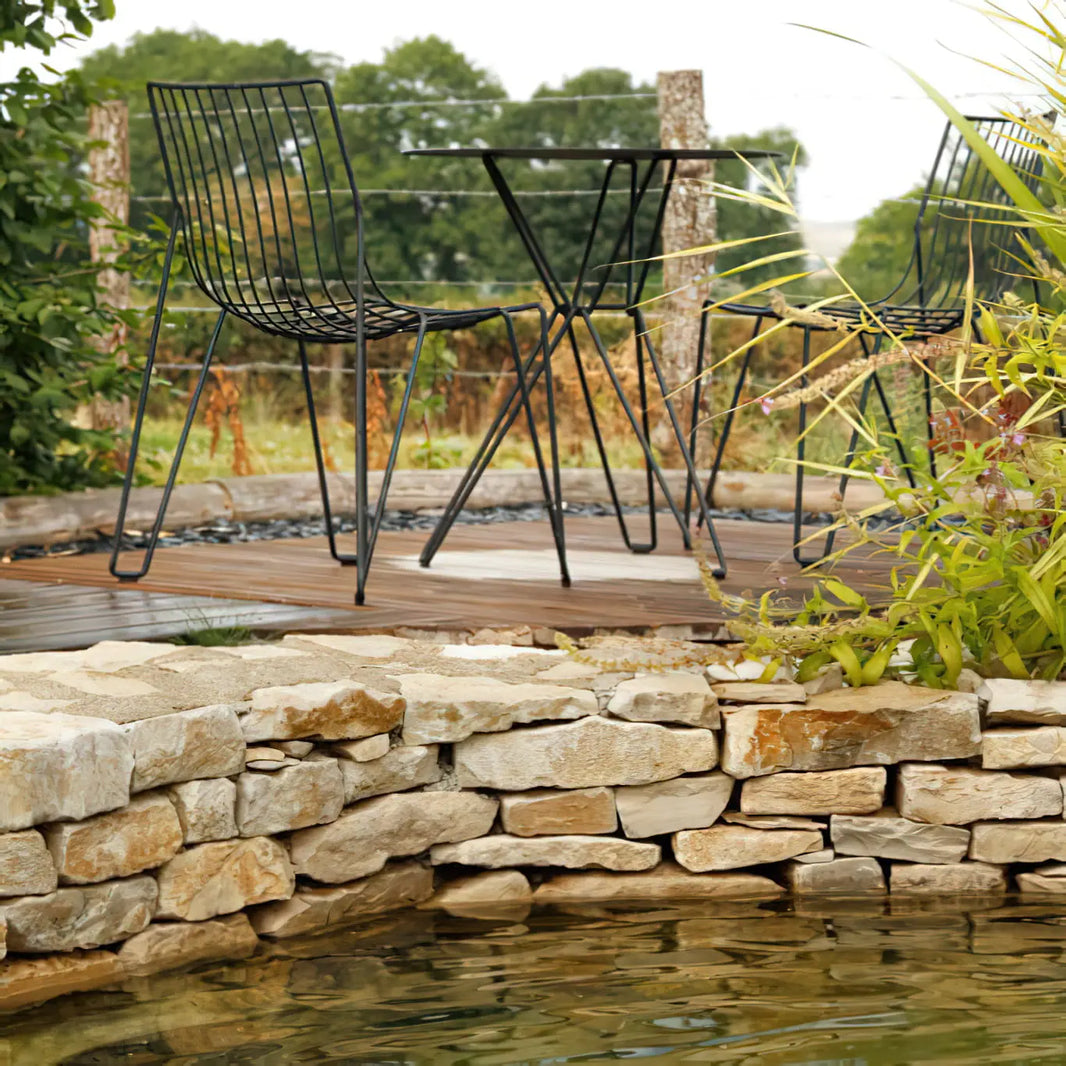
  • Sensitive environments (aquatic areas, ponds): choose naturally frost-resistant stones with a suitable texture (grip, drainage, water-repellent treatment).

2. Purpose and use

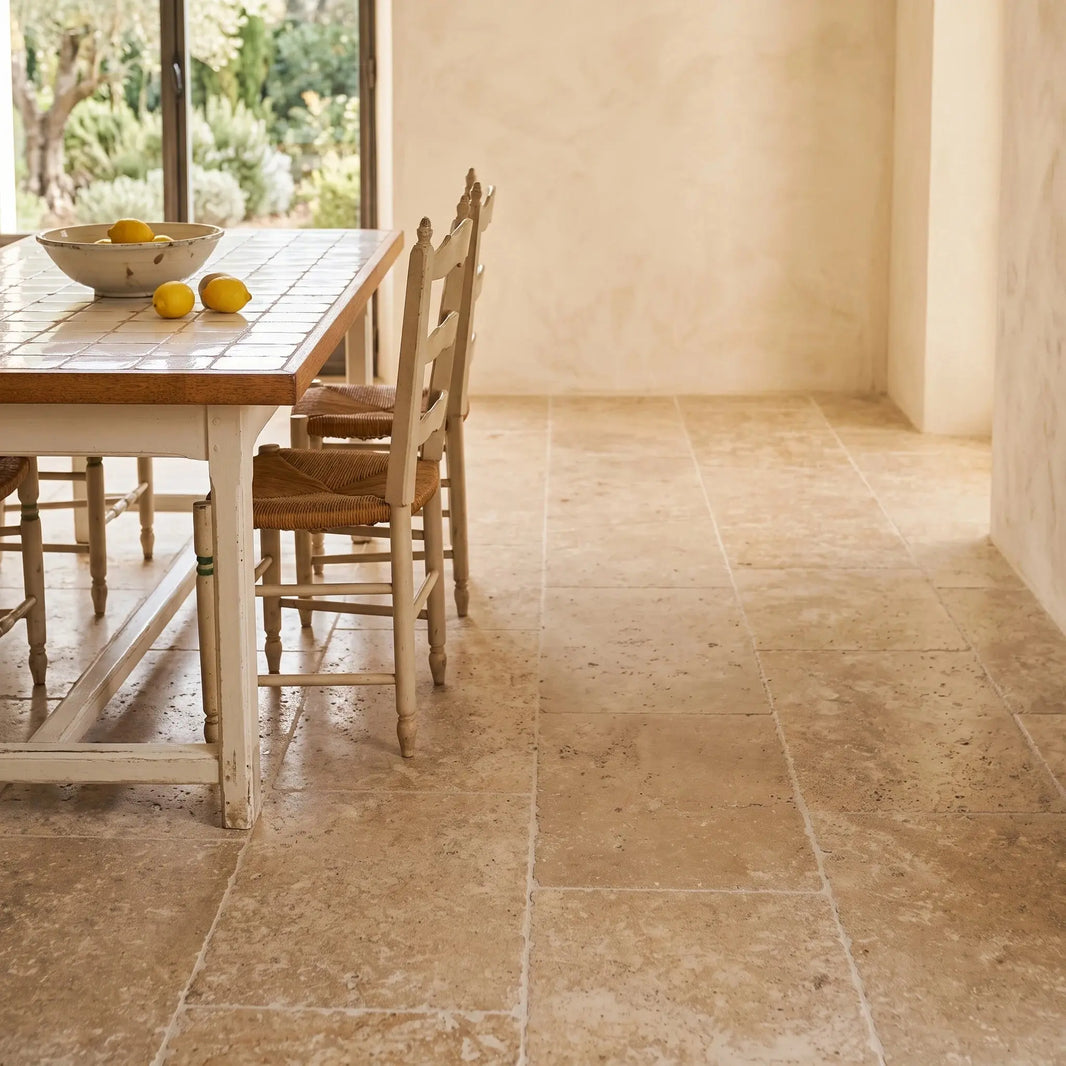
  • Floor: terrace paving, opus, random-length strips.
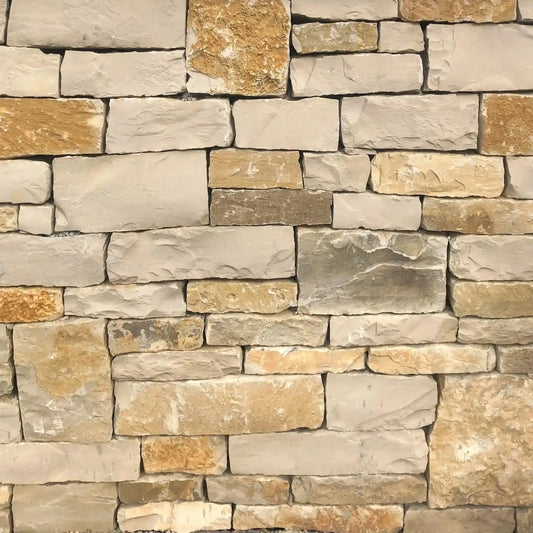
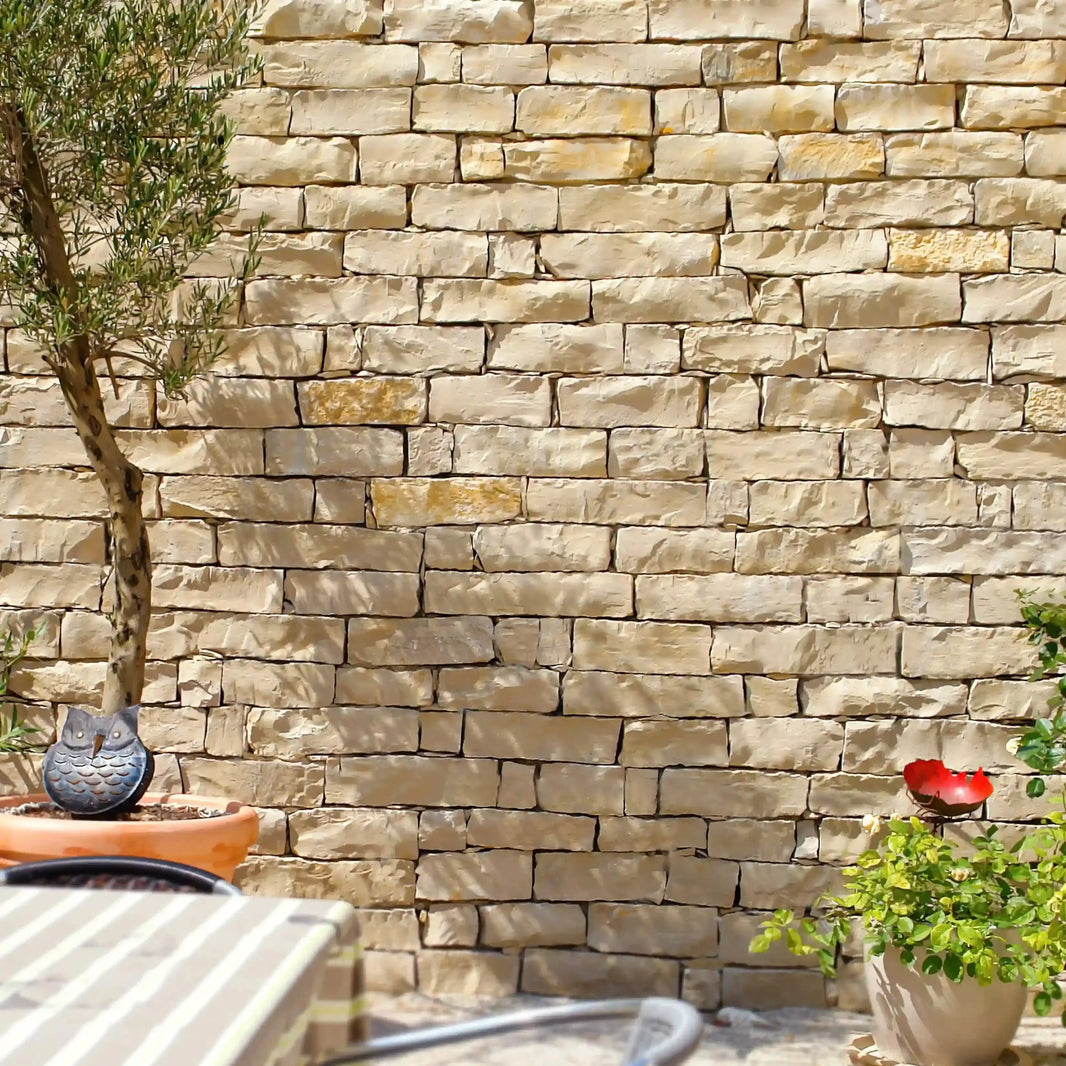
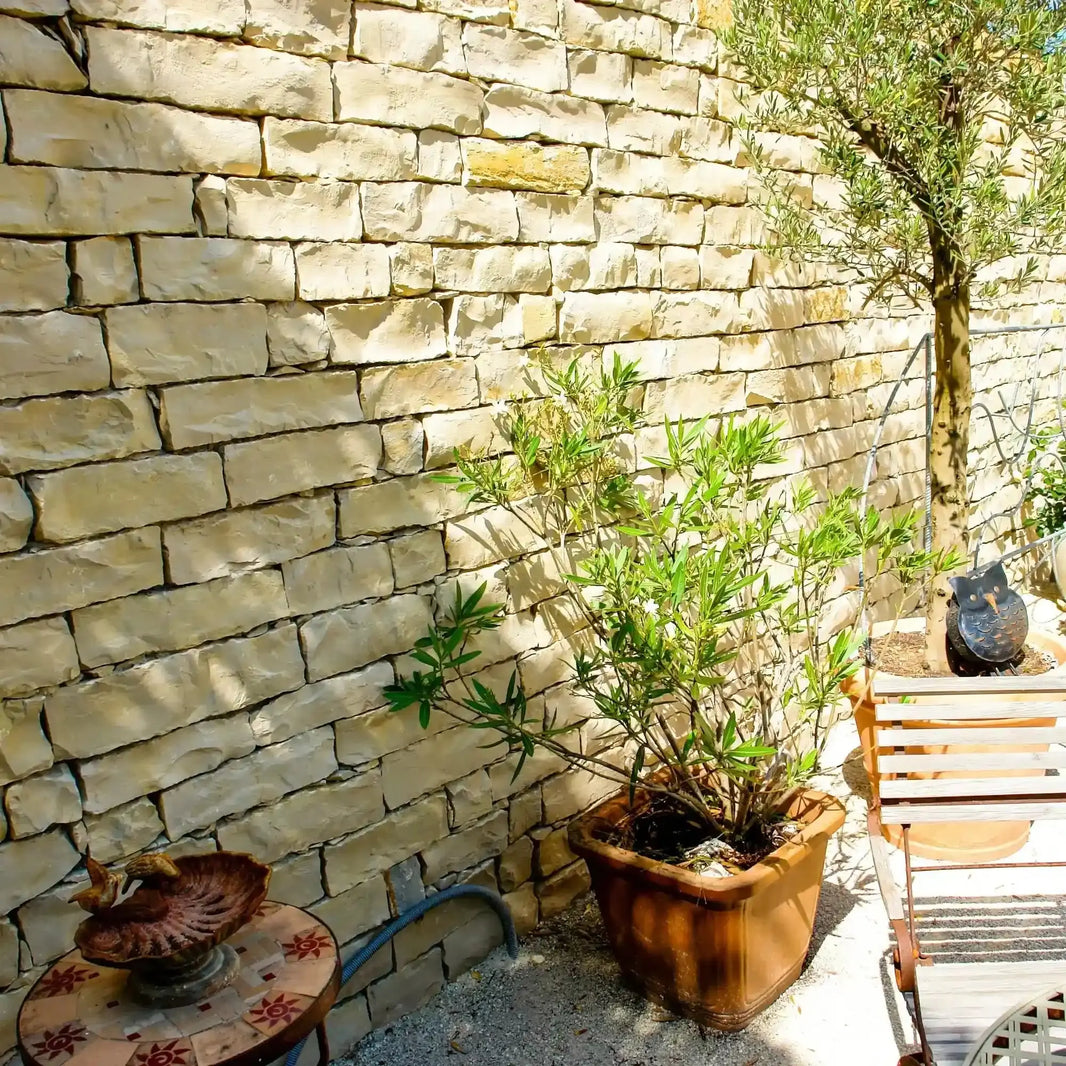
  • Wall: wall cladding, more textured look.
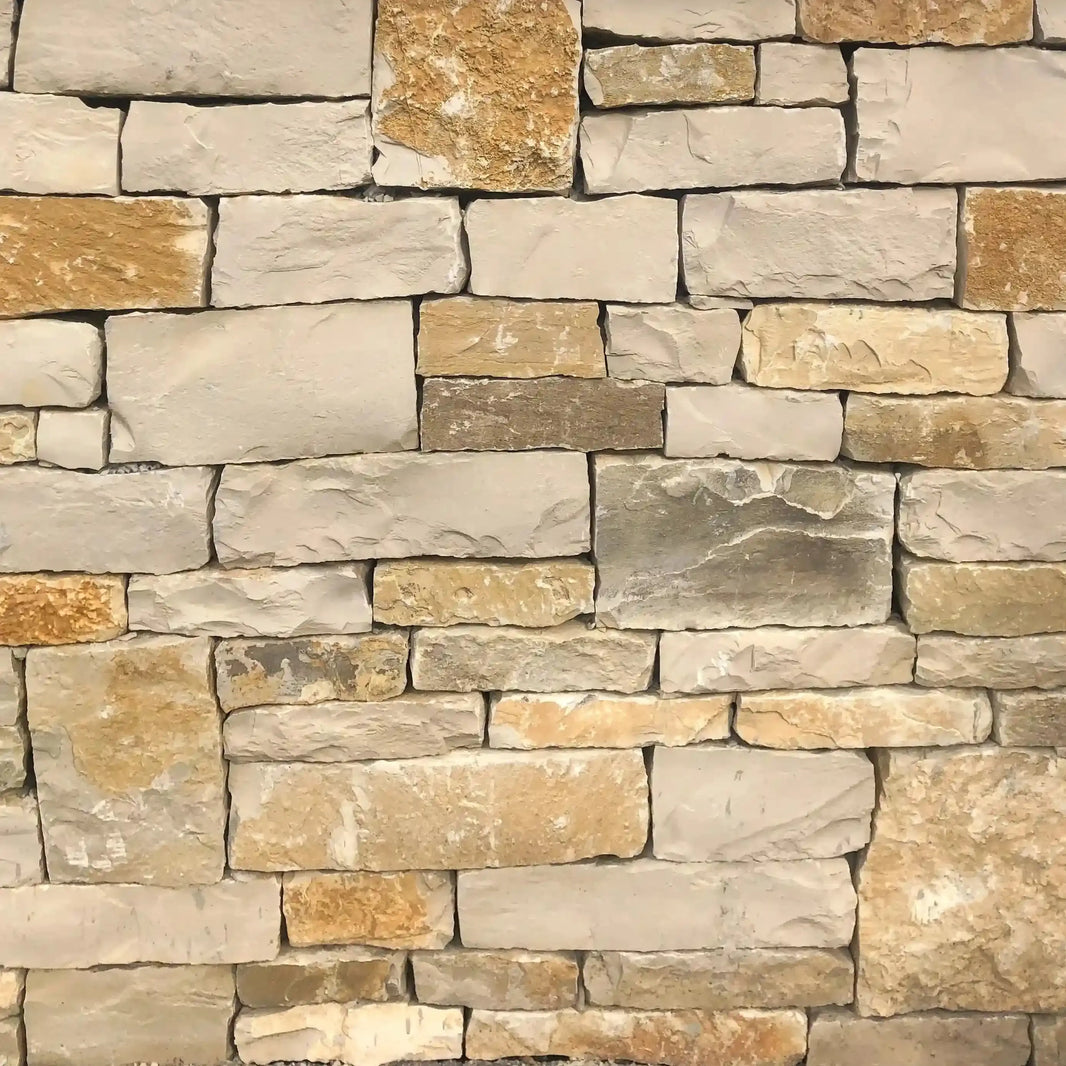
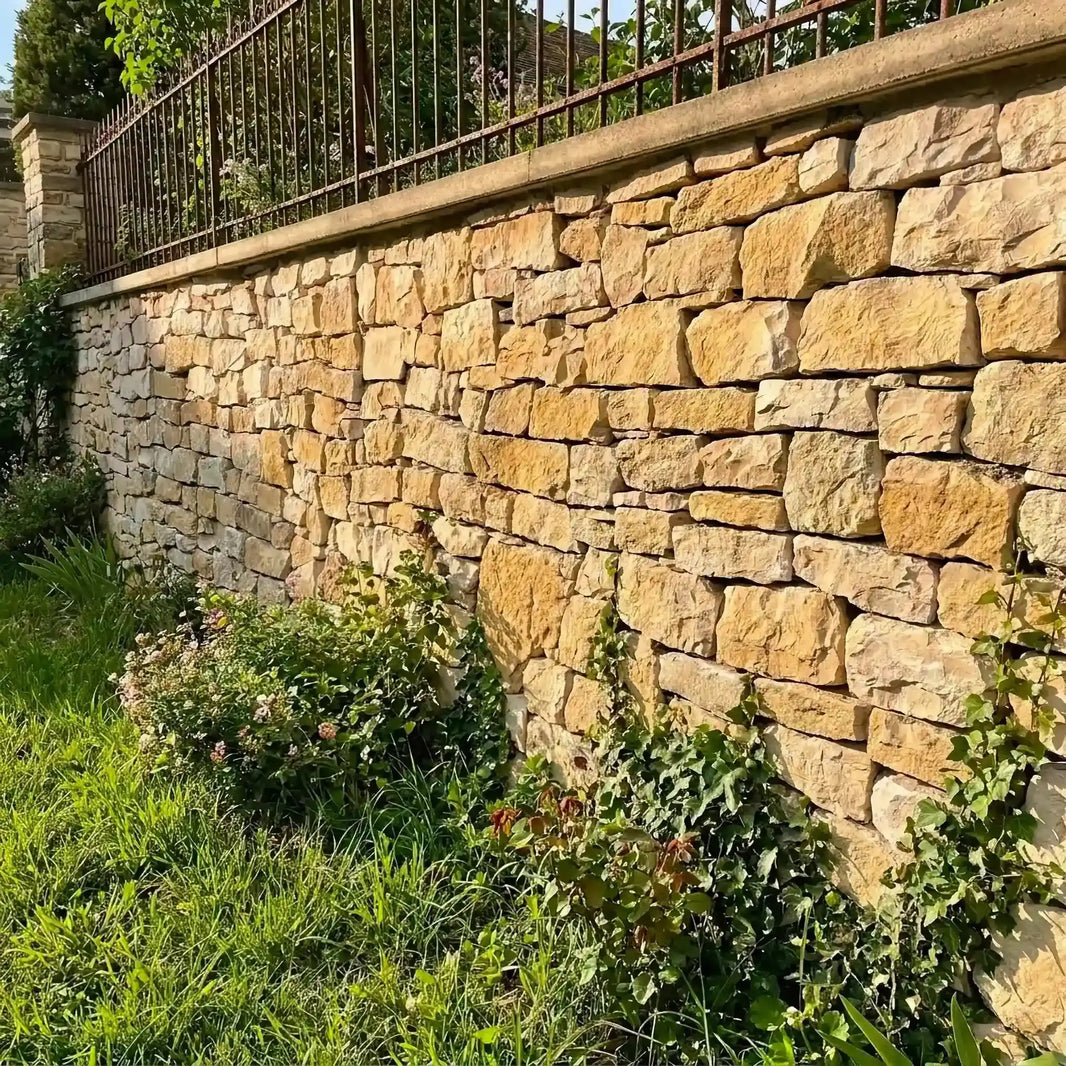
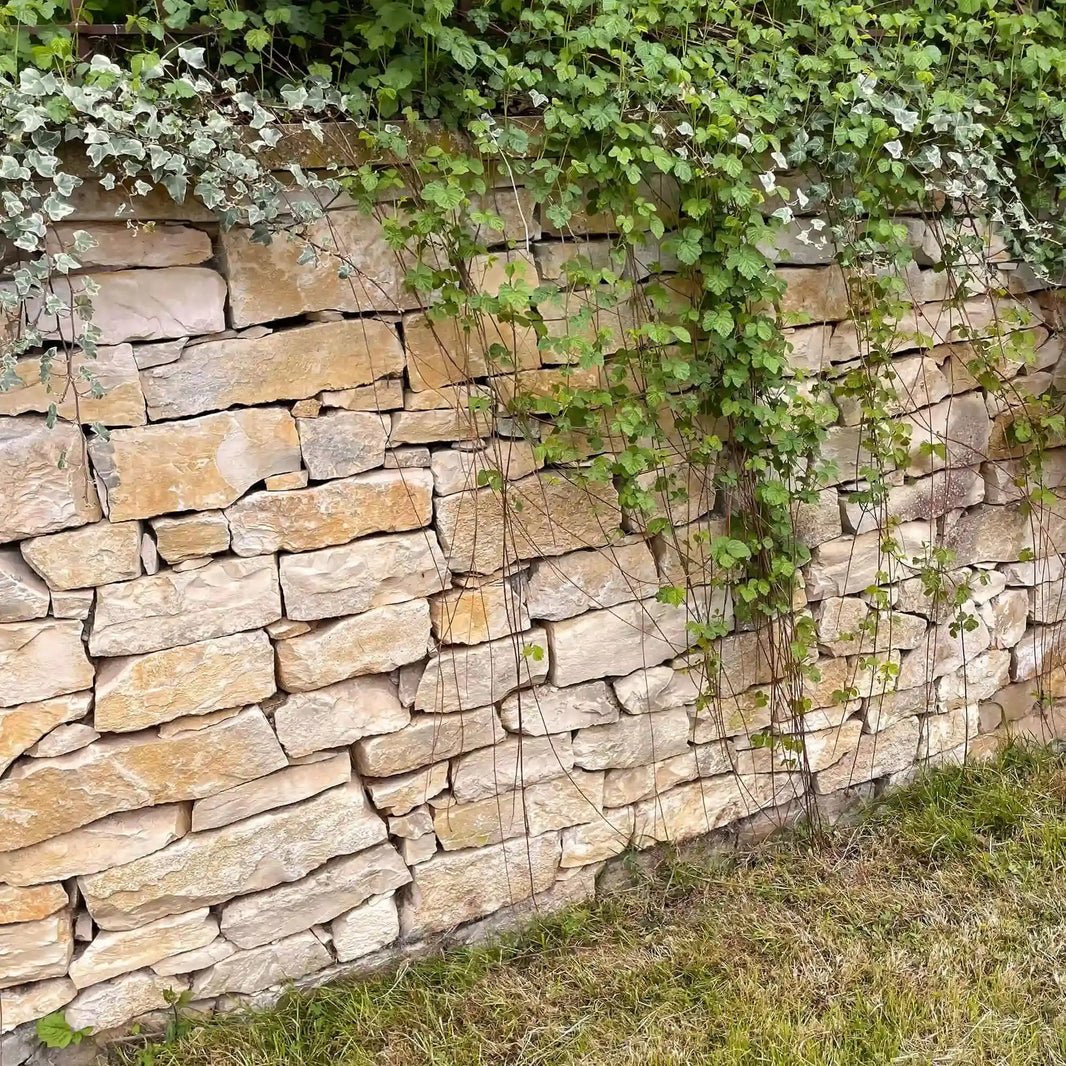
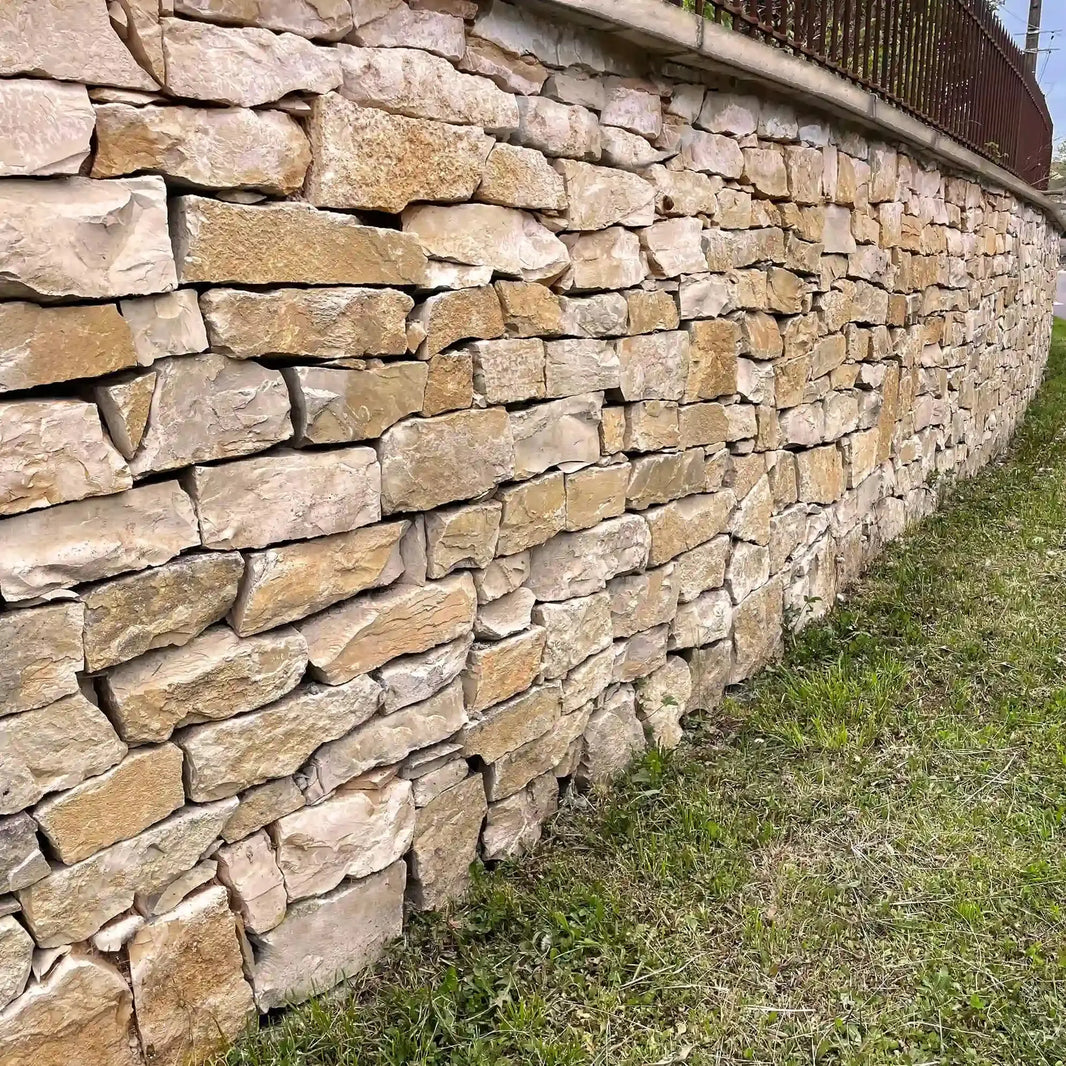
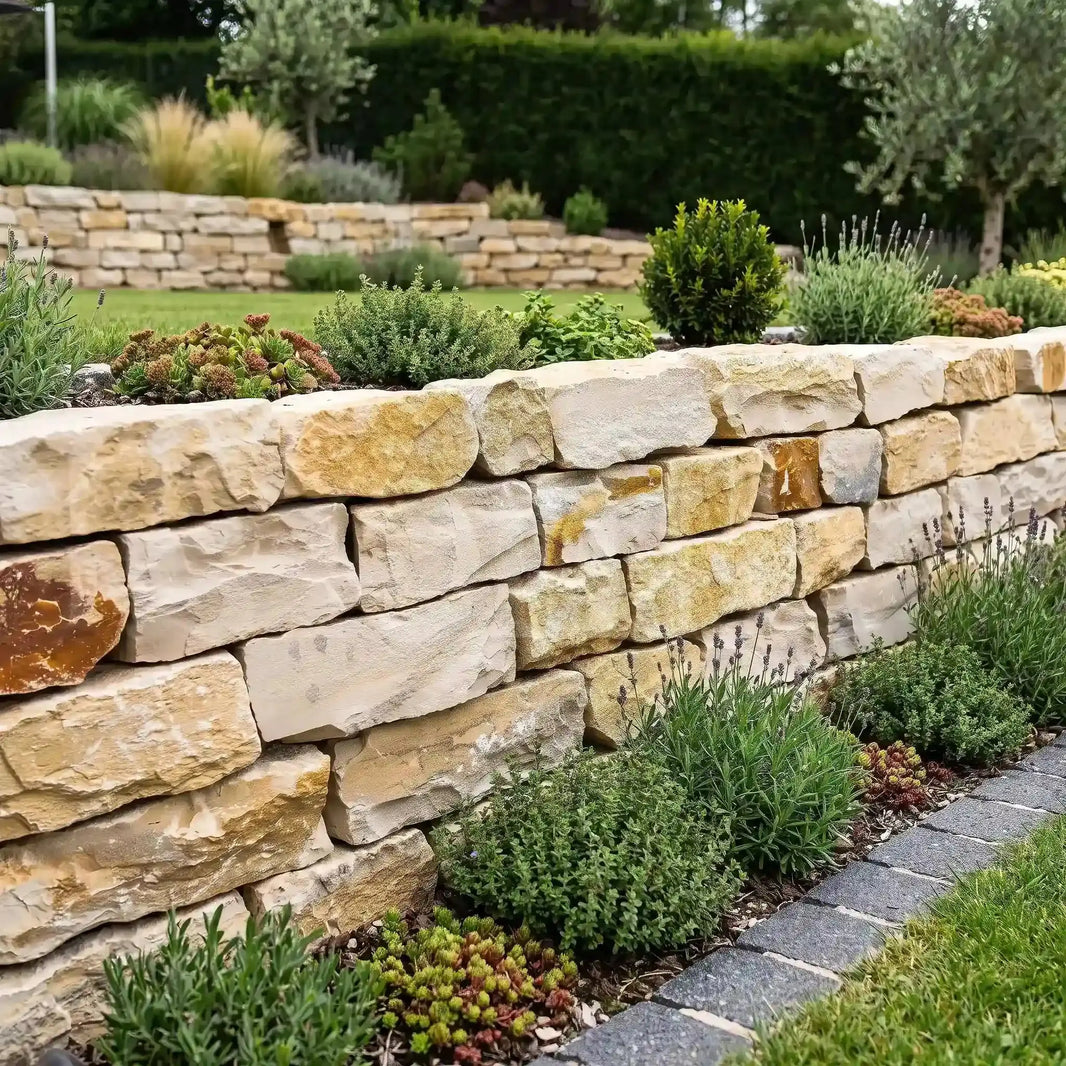
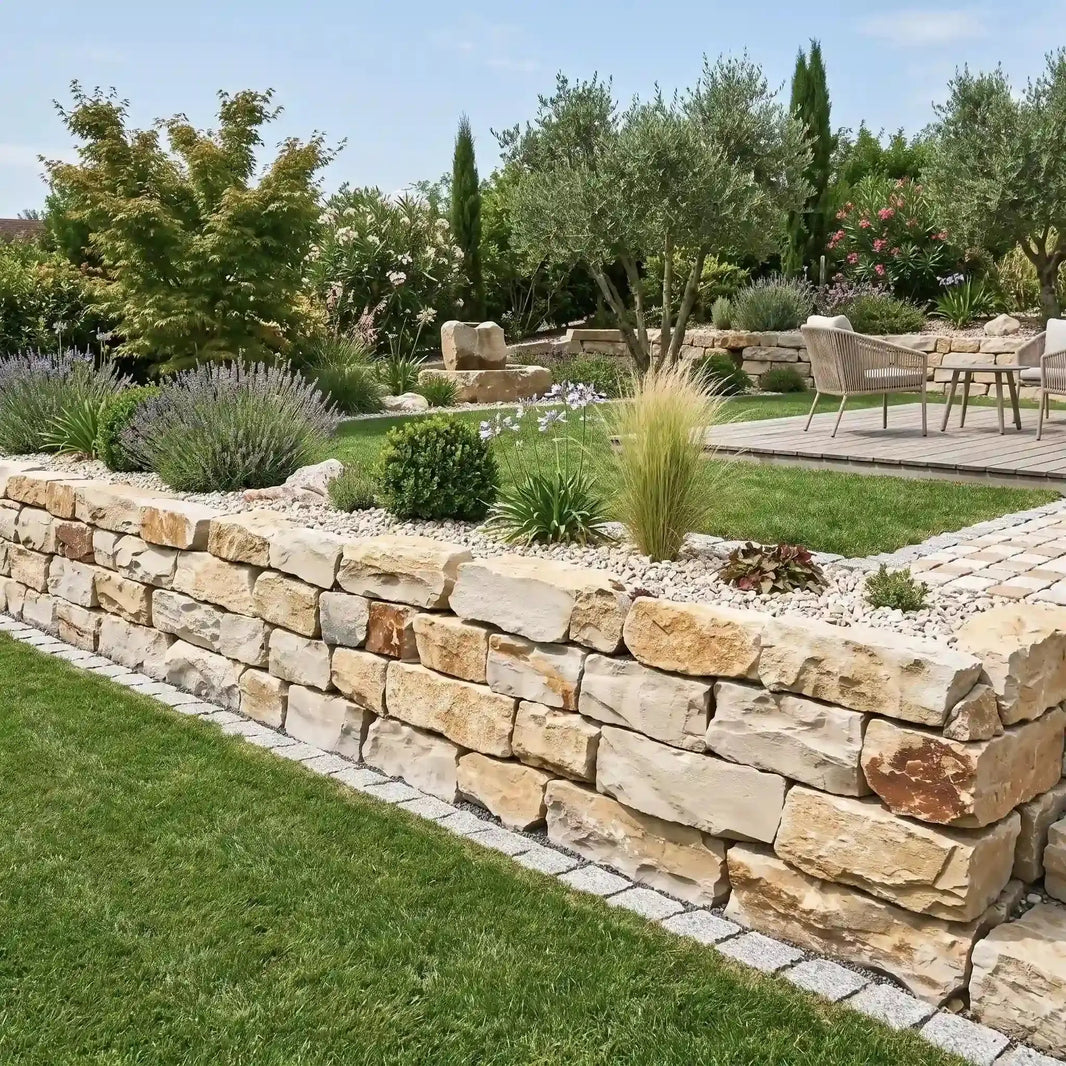
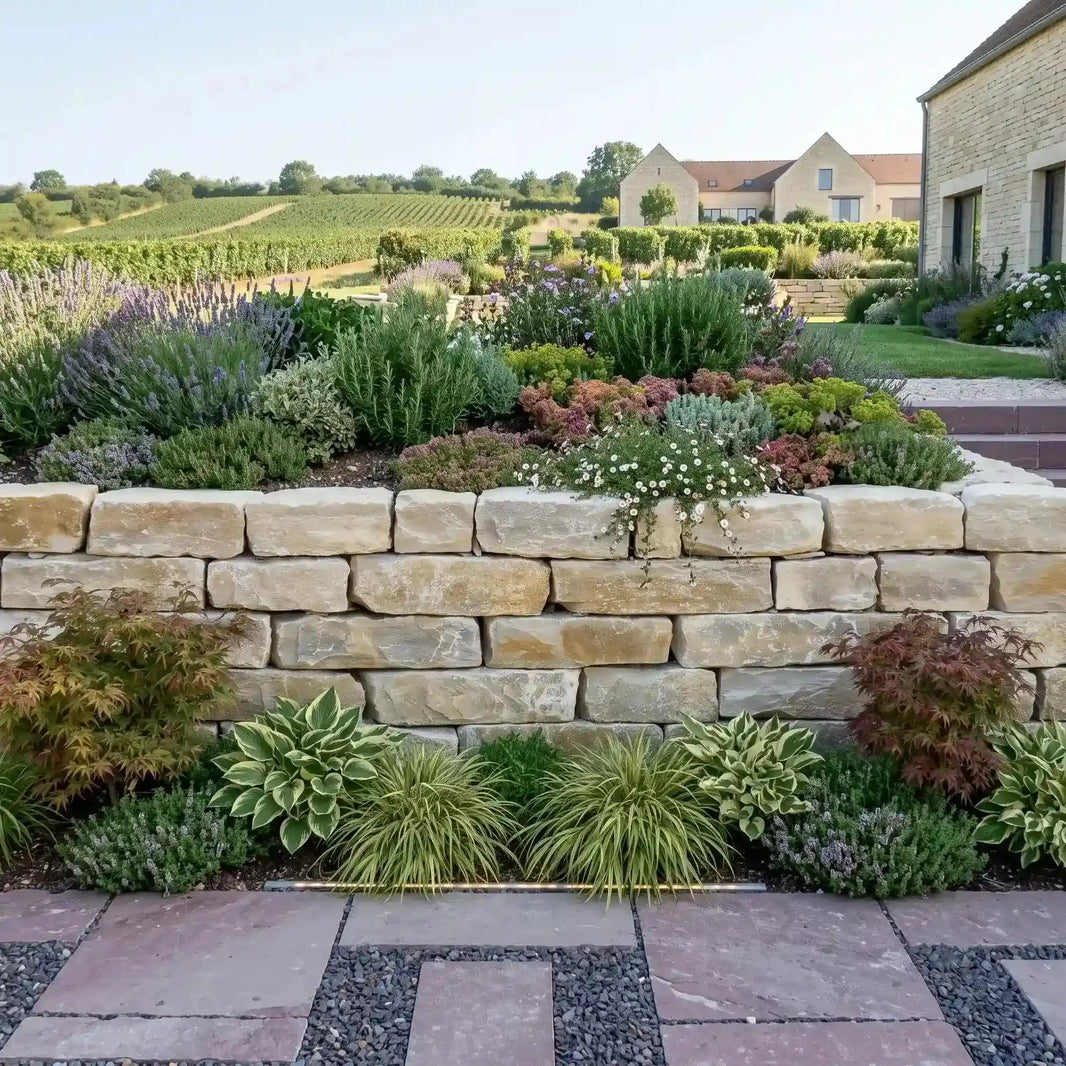
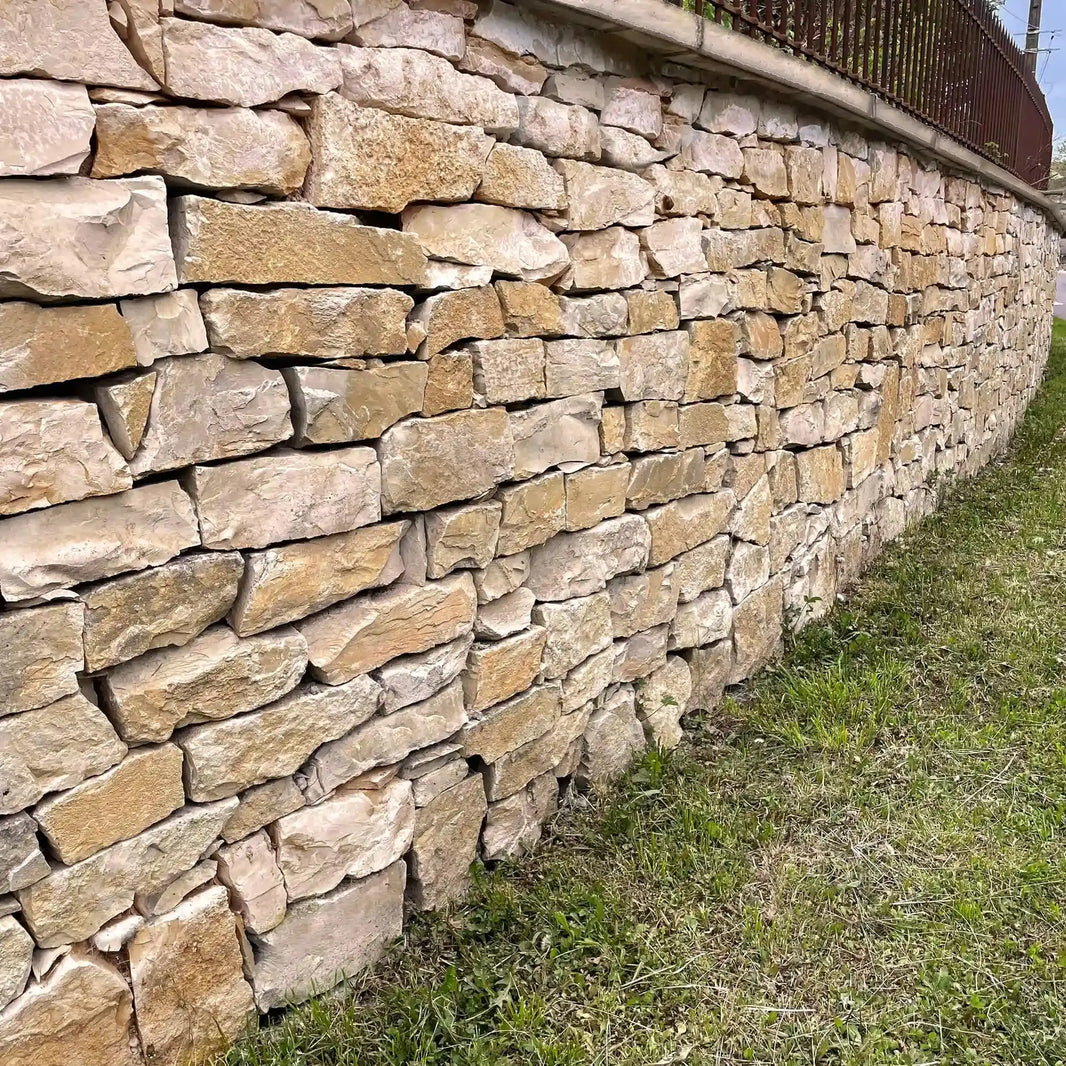
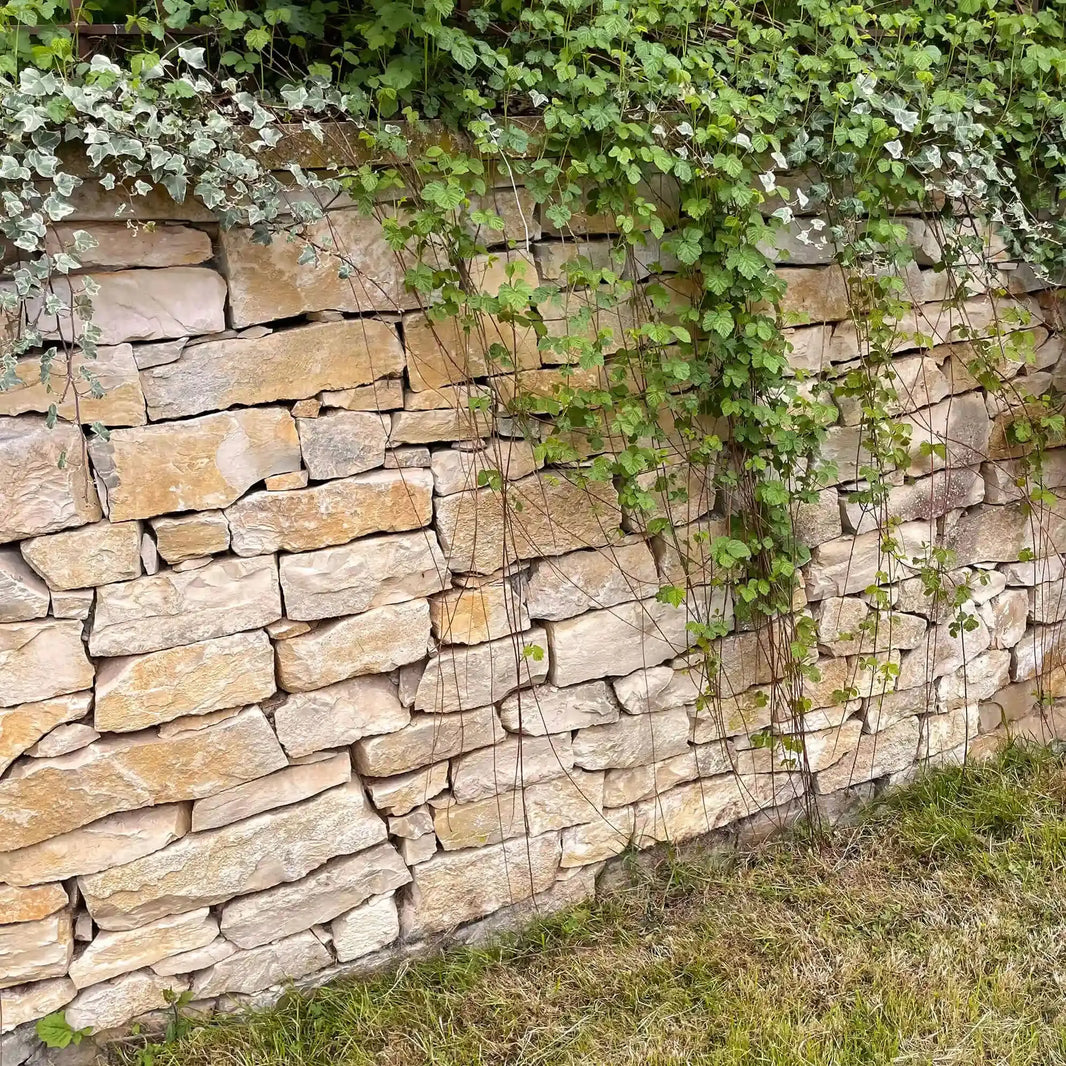
  • Low wall, planter: rustic blocks or split stones.
  • Steps, worktops: calibrated or made-to-measure pieces, for example in Comblanchien or Corton.

3. Desired look and style

  • Modern and minimalist: a selection of light stone or light blocks, sandblasted and brushed, in large format.
  • Rustic or country-chic: more nuanced stone (Beaunotte, Bois doré), aged, in strips or opus.
  • Heritage / traditional: Semond doré or Chassagne, in "abbey" format strips, brushed or hand-patinated.

4. Format

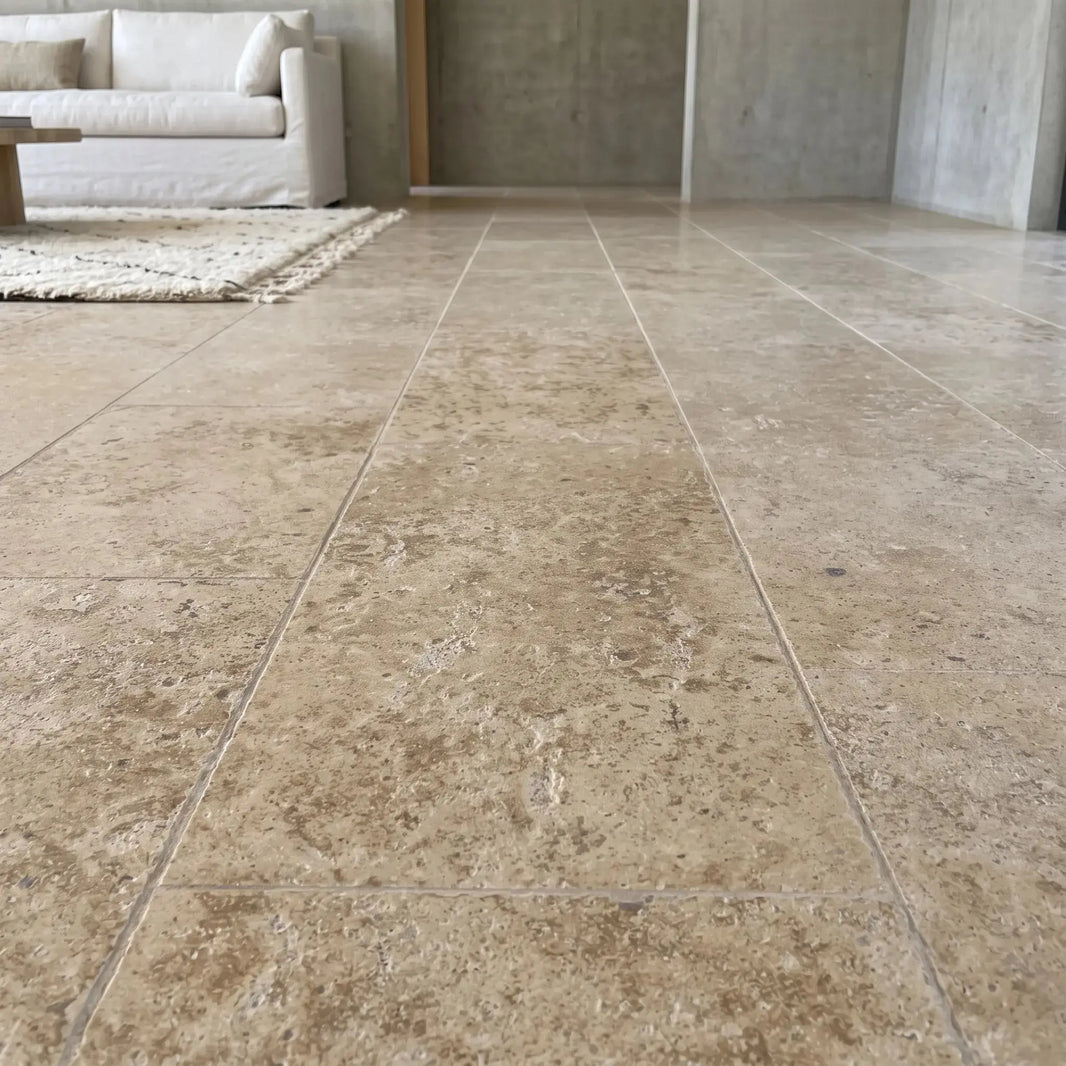
  • 40 cm strip ("abbey" format): the historic format of Burgundy stone, typical of old buildings, both noble and economical.
  • Large format 90×60: elegant and contemporary.
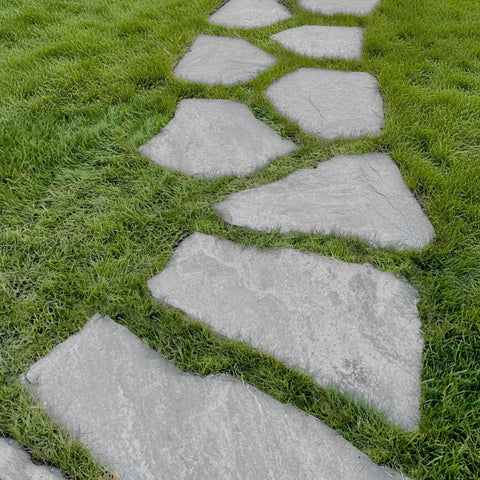
  • Crazy paving (opus incertum) or 4 formats: ideal for livelier visual effects.
  • Pavers and solid blocks: for driveways or imposing staircases.

5. Finish

  • Honed: soft to the touch, ideal indoors.
  • Aged: mechanically patinated, perfect for outdoor use or renovations.
  • Flamed, sandblasted, bush-hammered: rougher look, with strong visual texture and slip resistance.

Our team masters every step of the process:

  1. Direct selection of blocks at the source
  2. Made-to-measure processing in our certified factory IGP Pierre de Bourgogne
  3. Personalised advice according to the desired style, the technical context and your budget.

☢︎ Contact our experts to make the right choice and get a quote tailored to your needs. Every piece of Burgundy stone we offer is authentic, local and long-lasting: a true mark of value for your projects.

The price of a Burgundy stone element depends on many factors: type of stone, selection, finish, format, thickness, use, made-to-measure or standard. Here is a clear price guide to help you understand.

  • Entry level: from 35–50 €/m² incl. VAT, for small formats (such as 10x10 cm) with a thickness of 1.5 cm.
  • Standard range: between 80 and 110 €/m² incl. VAT, for slabs in 40 cm strip format, in aged or brushed finish.
  • High end: up to 200 €/m² incl. VAT, for large formats 90x60 cm, thickness 3 cm or antique paving hand-patinated.
➤ Focus: the 40 cm strip format, or Abbey format

This emblematic format (fixed width of 40 cm, free lengths between 50 and 80 cm) is historically linked to French religious architecture. It comes from a principle of peasant common sense: optimizing every slice without waste.

➡︎ Thanks to our in-house expertise, we recommend this format for a traditional, economical, and noble result.

➤ Other products available in Burgundy stone

We also make:

  • Pavers, pool copings, borders, plinths, step blocks, cladding, fountains, pillars, etc.
  • On request: special made-to-measure pieces for staircases, worktops, cellars, furniture, etc.

At Minéral, we own our manufacturing plant in Burgundy (SIB PIERRE DE BOURGOGNE), certified IGP.

  • On site, we directly process the blocks from our own sites or from local partners.
  • No middleman: direct manufacturer price, controlled from extraction to delivery.
  • We keep several references in stock, available immediately for your urgent projects.

☎︎ Need a quote? Our team replies within 24h with a clear, tailored proposal with no unnecessary extra costs.

The choice of texture affects the aesthetic appearance, the feel, the possible use and the installation. Here are the main textures available, all carefully selected according to the type of stone and the intended use:

Honed

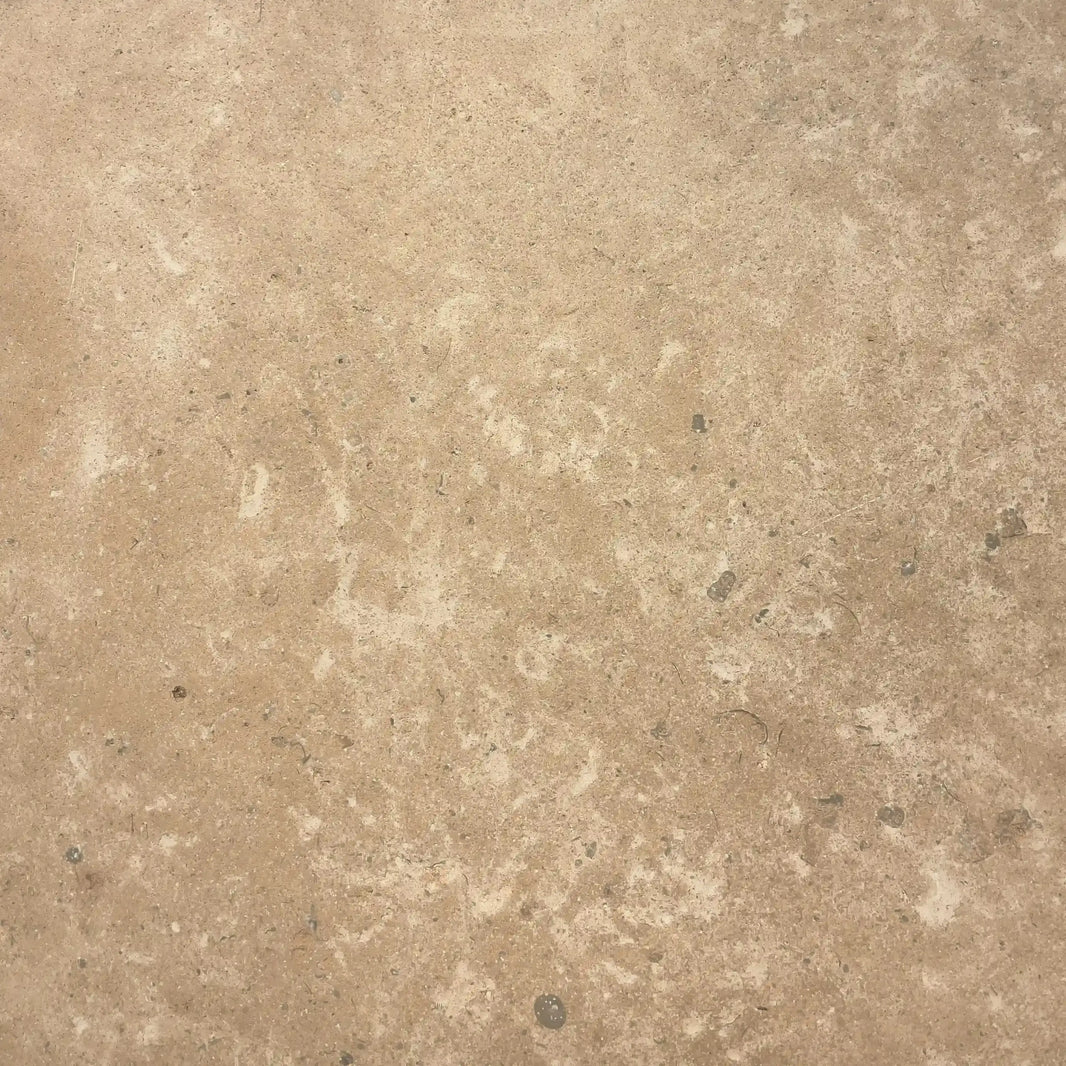
A soft and silky surface to the touch. Straight edges. Ideal for indoors. It showcases all the natural nuances: veining, shells, varied hues. The smoother the surface, the more visible the details – which means more rigorous maintenance.

Brushed

Slightly textured, matte. Straight edges. A contemporary look, more discreet than honed. Suitable both in enclosed spaces and in open environments, depending on the composition. Recommended for those seeking a sober and natural look.

New Médieval

Soft surface, slightly aged. Very slightly irregular edges (chipped), for an authentic look without becoming rustic. Highly sought after for elegant projects with character.

Médieval

A more rustic variant of New Médieval. More pronounced relief, rougher edges. Deliberately irregular surface. Recommended for renovations, country houses, heritage installations.

Aged

Surface mechanically patinated to simulate the wear of time. Irregular texture and edges. Ideal for outdoor areas, renovations or spaces with old-world charm. Good tolerance of imperfections and of heavy use.

Flamed, sandblasted, bush-hammered

More technical features. Rough or structured look. Strong non-slip grip. Ideal for exposed outdoor areas (front steps, driveway).
Please note: not all Burgundy stones can be flamed. This treatment depends on their mineralogical composition.

Absolutely. Burgundy stone is one of the few natural materials to offer such great versatility while retaining its elegance and durability.

Indoors, it is perfect as:

  • Flooring for living areas,
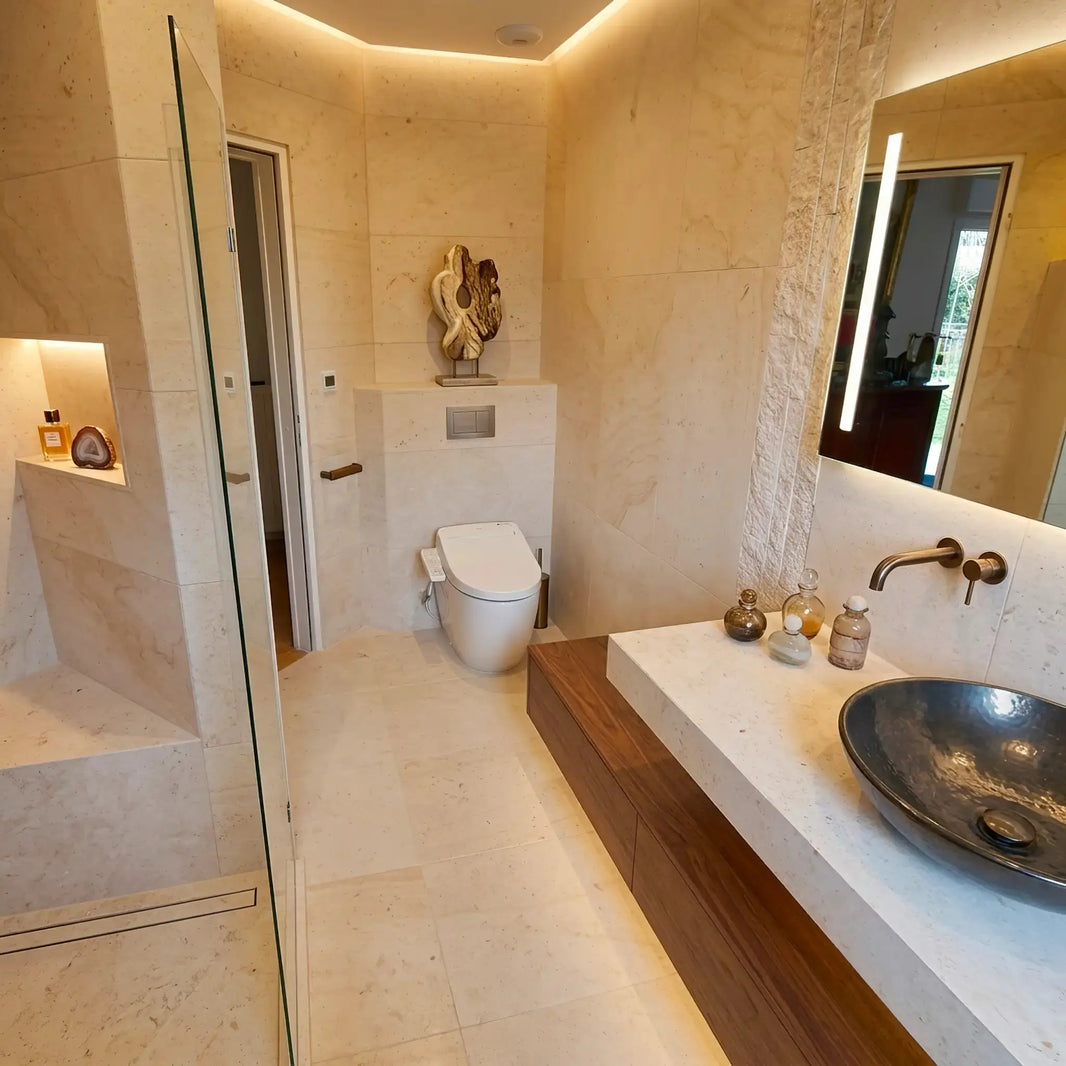
  • Wall tiles in bathrooms,
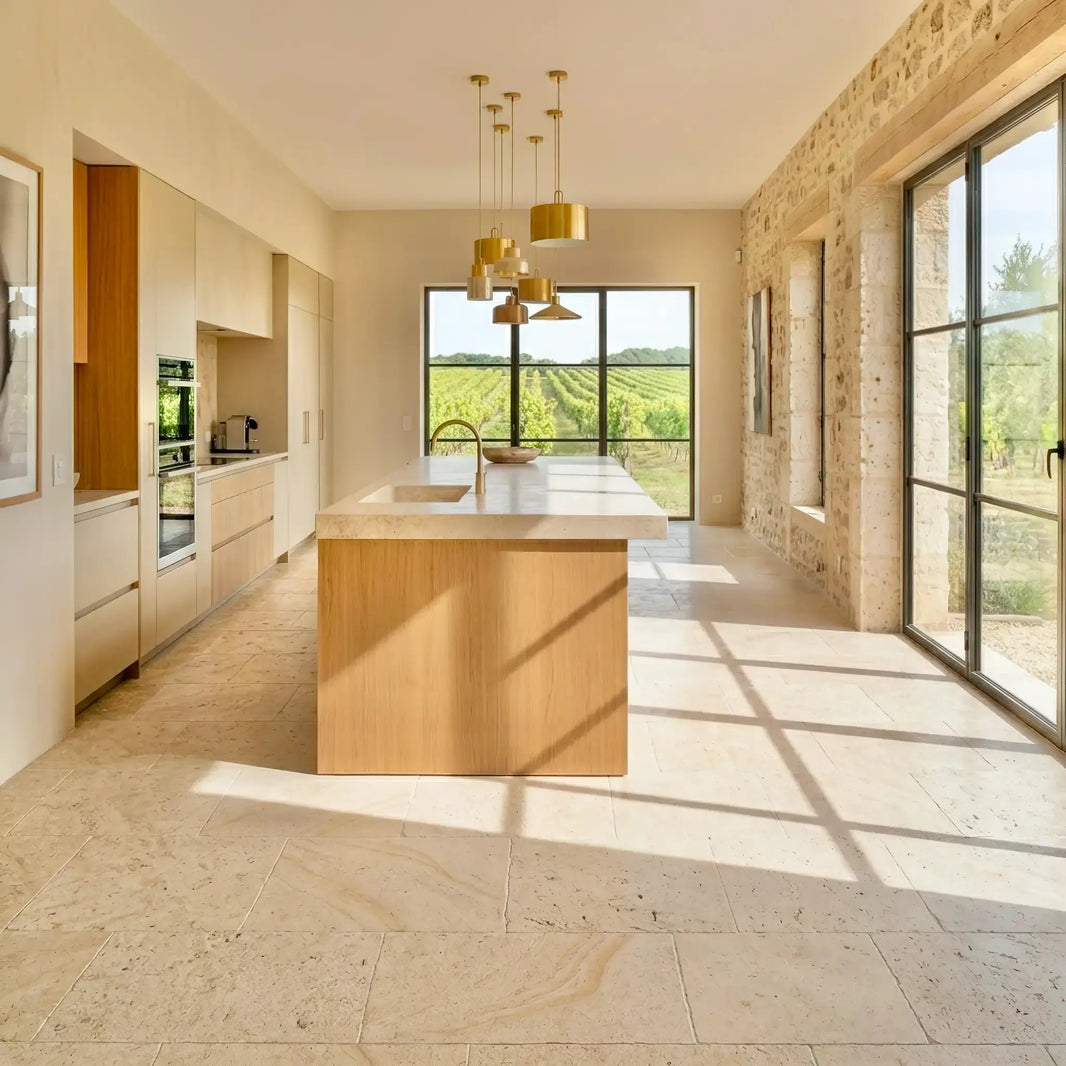
  • Kitchen or staircase cladding.

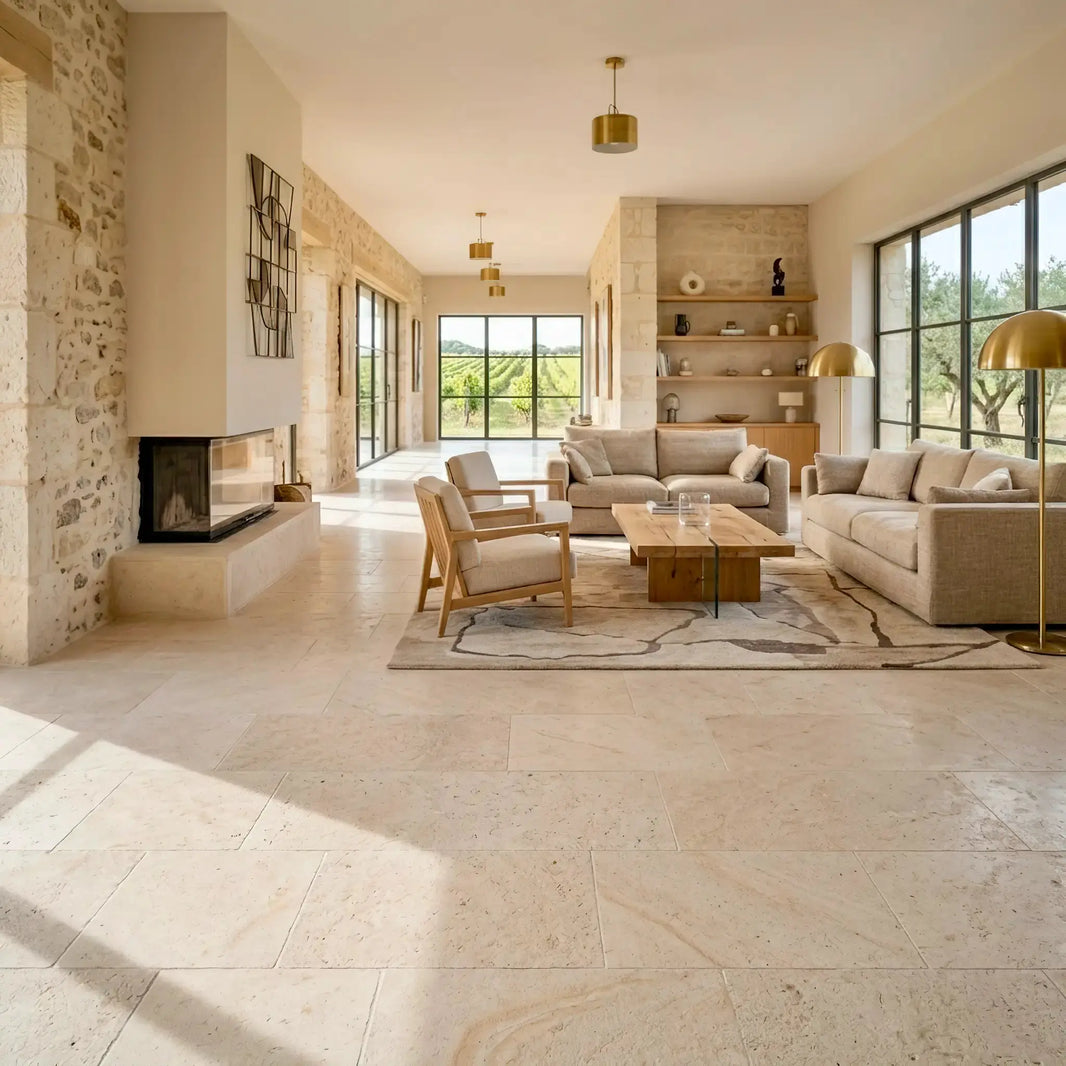
Its soft beige, cream, lightly veined tones create an understated, warm atmosphere, far more authentic than industrial tiles. In a honed finish, it is pleasant to the touch, easy to maintain, and compatible with underfloor heating.

Outdoors, Burgundy stone is used for

  • Terraces,
  • Pool copings
  • Low walls, borders,
  • Pavers for paths, even vehicle-accessible areas.

Thanks to its natural frost resistance, its robustness, and the diversity of its textures (aged, flamed, brushed, patinated…), it adapts to demanding climates and intensive use.

Our expertise covers the entire chain: on-site selection, processing in Burgundy at our IGP-certified factory, storage, and fast shipping throughout France and internationally.

Whether you are looking for a reference in stock or a made-to-measure format, our teams will guide you to the right stone, in the right format, with the right texture.

Choosing Burgundy stone means much more than making an aesthetic choice:
It is a choice of meaning, value and longevity.

Within our group, we fully control the resource:
We extract it, we process it in our own IGP-certified factory, and we sell it directly with no intermediary and no approximation.

1. A French natural stone with international reach

Burgundy stone is quarried exclusively in Bourgogne-Franche-Comté, using traditional know-how passed down for centuries.

It benefits from the Protected Geographical Indication (PGI):

  • Certified origin
  • Local processing
  • Full traceability

It is a heritage material, used in cloisters, mansions and contemporary homes — in France, in England, as far as the United States.

2. A unique, elegant and understated look

Each slab is unique.
Shades of beige, subtle veining, fine or shelly grains, surfaces that are honed or aged:
Burgundy stone suits every architectural style, from rustic to the most modern. It does not try to imitate: it embodies.

3. A durable and timeless material

It withstands frost, heavy foot traffic and time.
With good care, it passes through generations without losing its charm.
Paving laid today will still make sense in 50 years.

4. A local and responsible commitment

By favoring this local resource, you:

  • Support the French economy,
  • Promote family-run businesses,
  • Preserve an artisanal know-how,
  • And reduce the carbon footprint linked to transport from exotic countries.

This is not simply a raw material.
It is an architectural material.
A deliberate choice. A cultural anchor. A real presence