
Natural stone or porcelain stoneware: which covering to choose for an outdoor floor?

1. Appearance

What look are you after?
Bodenplatte Kalkstein DU PERIGORD - Minéral Naturstein

Natural stone

Unrivaled authenticity

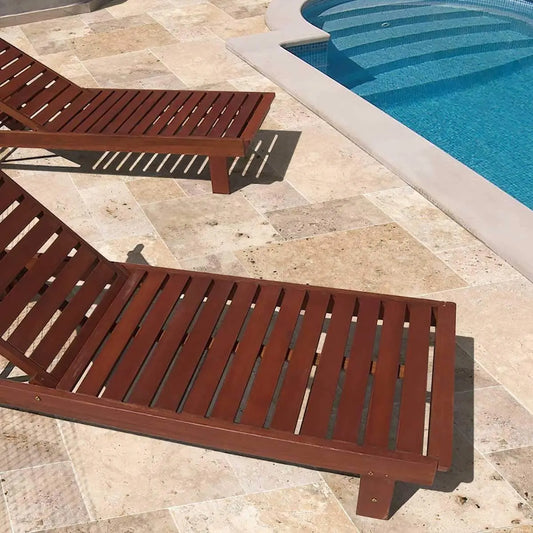
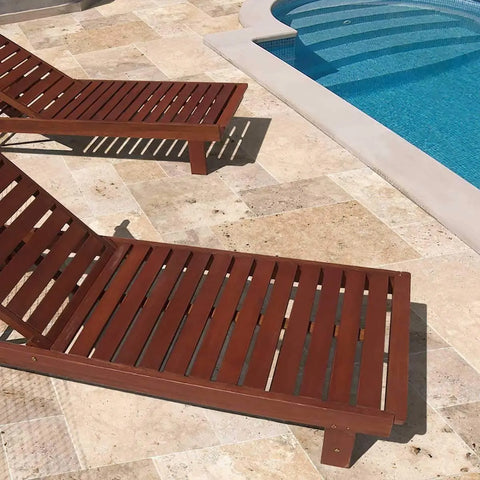
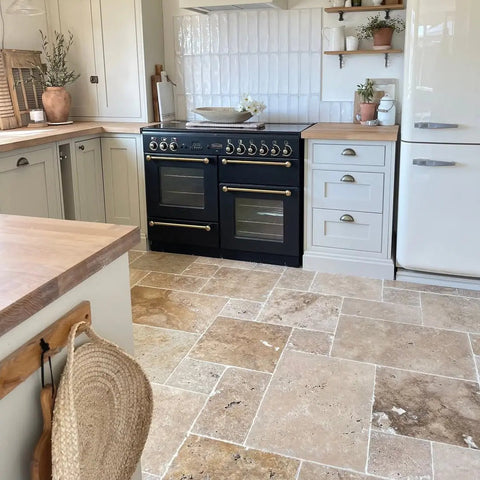
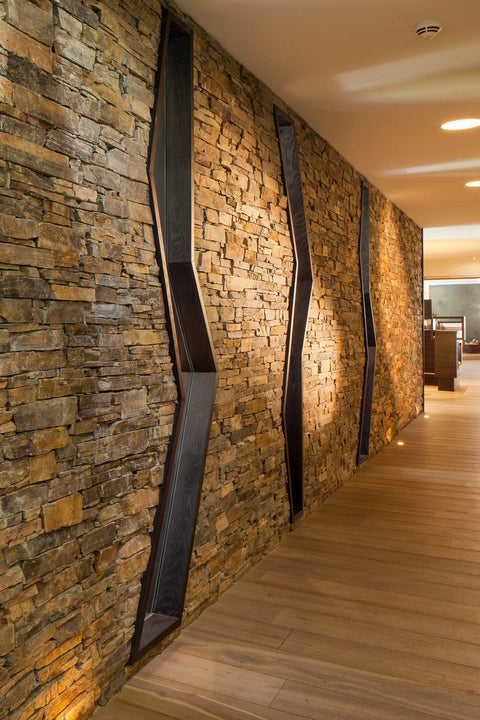
The difference is visible, but more importantly, it is palpable. Relief, touch, fossils, veining, straight or aged edges, more or less textured finishes: a real stone is more than just a printed pattern. On a travertine, for example, the cavities, nuances, and material give a result that an imitation can visually approach, but hardly fully reproduce.

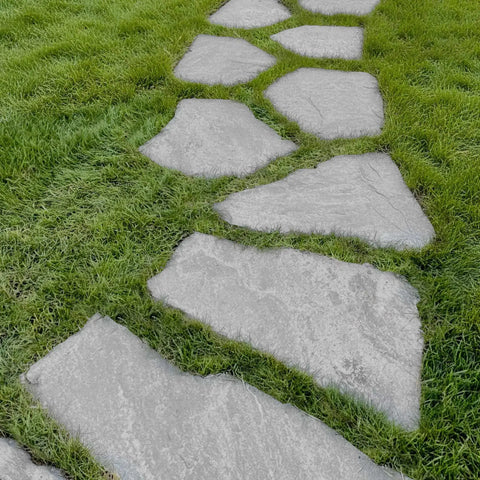
Stone also allows for a wide variety of formats: small pavers, opus, free lengths, or large slabs. Here, the goal is not necessarily the largest possible format, but the one that provides the most natural and coherent look with the house. This is what allows it to work equally well in a farmhouse or around a contemporary seaside villa.

VIEW THE SELECTION →
Carrelage extérieur effet TRAVERTIN LIGHT CROSS - 2 cm Minéral Naturstein

Porcelain stoneware

Highly realistic effects and spectacular formats

Porcelain stoneware has evolved tremendously. Current collections are no longer limited to a few repetitive patterns: the same product can offer several dozen different designs, sometimes up to 60 or 70 variations, to reproduce natural stone, as well as concrete, wood, or marble, with great realism.

Its other major advantage lies in its formats. Its thinness makes it easy to offer large dimensions, such as 90 × 60 cm, 120 × 120 cm, or larger depending on the collections, whereas the equivalent in natural stone would become much heavier and more expensive. Perfectly straight edges, very thin joints, and large, uniform surfaces: porcelain stoneware allows for a very refined finish.

VIEW THE SELECTION →

🏆 VERDICT: NATURAL STONE ADVANTAGE


For the richness of the material, the relief, the feel, and the variety of formats.

Porcelain stoneware now offers very realistic imitations and impressive large formats, but stone retains the advantage for the authenticity and character of a truly natural material.

2. Aging

Do you prefer a material that develops a patina or one that maintains a stable appearance?
Dallage en pierre de Bourgogne LANVIGNES Minéral pierre naturelle

NATURAL STONE

It gets better with time

Natural stone gradually evolves over the years. The sun, rain, and foot traffic soften its hues and create a patina that gives it even more depth and character.

This is precisely one of its great assets: like a good wine, a beautiful stone does not seek to remain new; it improves with age.

VIEW SELECTION →
Carrelage extérieur effet pierre ICE BLUE - 60 x 60 x 2 cm Minéral pierre naturelle

Porcelain stoneware

A very stable look over time

Porcelain stoneware is one of the exterior coverings that changes the least visually. Its colors and pattern remain very close to their original appearance for many years.

Over time, it can naturally get dirty or stained depending on exposure, but unlike natural stone, it does not develop a patina. The initial chosen appearance therefore remains very stable over time.

VIEW SELECTION →

🏆 VERDICT: Draw


Natural stone develops a patina over the years and gradually gains character: this is precisely part of its charm.

Porcelain stoneware evolves much less visually and retains a very similar appearance to the one chosen initially. Here, the choice mainly depends on what you prefer.

3. Maintenance

Which material requires the least maintenance?

NATURAL STONE

Easier maintenance than you'd think

Contrary to popular belief, a natural stone patio does not require complicated maintenance. We specifically select stones for outdoor use that are suitable for this purpose,
adapted for outdoor use and easy to live with every day.

  • For routine maintenance: a water jet and a scrub brush are usually sufficient.

  • For stains: the sun and UV rays naturally help to fade some small marks over time.

  • For more exposed areas: around a barbecue, dining area, or under certain trees, a water-repellent treatment can be applied to limit absorption and further facilitate cleaning.

  • In case of stubborn stains: there are products adapted to each type of stone and dirt. No need to bring out the heavy artillery at the slightest accident.

HOW TO MAINTAIN NATURAL STONE? →

VIEW SELECTION →

Porcelain stoneware

The easiest to maintain

This is one of the major advantages of porcelain stoneware. Being very low porosity, it absorbs stains with difficulty and does not require a water-repellent treatment.

  • Low stain sensitivity: grease, drinks, and dirt generally remain on the surface.

  • Easy to clean: water and a suitable common cleaning product are sufficient in most cases.

  • High-pressure cleaner: it can be used more confidently than on some natural stones, obviously taking care of the joints.

  • No special treatment required: no water repellent or specific product for routine maintenance.

Like any terrace, it will obviously need to be cleaned from time to time. But if you are looking for the material that requires the least daily care, porcelain stoneware clearly has the advantage.

VIEW SELECTION →

🏆 VERDICT: porcelain stoneware wins


Natural stone is still simple to maintain, and a few good habits are enough for daily care.

But porcelain stoneware goes even further: very low porosity, not very susceptible to stains, no waterproofing treatment required, and compatible with more intensive cleaning, it is clearly the easiest choice if maintenance is your priority.

4. Resistance

Two Materials Made to Last
Bodenplatte extérieur Kalkstein LIMA BEIGE Bords bruts Minéral Naturstein

NATURAL STONE

A strength proven over centuries

  1. Highly resistant to weight and foot traffic: Natural stone has been used for centuries in streets, courtyards, terraces, and buildings.

  2. Weather-resistant: When suitable for outdoor use, it withstands frost, heat, and temperature variations very well.

  3. Solid throughout: The material is the same throughout its thickness. A small chip, scratch, or wear will therefore blend much more naturally into the stone.

  4. Repairable and renovable: After many years, a stone can often be deeply cleaned, sanded, or restored rather than replaced.

  5. Stone selection is crucial: Not all natural stones are suitable for the same uses. For outdoor applications, we only select stones that can withstand frost, bad weather, foot traffic, and aging over time. This is also why our selection differs for an indoor floor compared to an outdoor terrace.

VIEW SELECTION →
Außenfliesen in Steinoptik ARDESIA – 80 x 40 x 2 cm – Minéral Naturstein

Porcelain stoneware

Impressive performance in a package only 2 cm thick


  1. Over 1,000 kg per slab: This is the load resistance announced by Mirage for its 20mm outdoor slabs.

  2. From extreme cold to high heat: Mirage announces maintained performance from -50 °C to +60 °C.

  3. Frost resistant: Its very low water absorption makes it a material particularly suitable for outdoor use.

  4. Scratch and wear resistant: It withstands repeated foot traffic very well and retains its surface over time.

  5. Stain and chemical resistant: Grease, chlorine, salt, and many everyday stains pose few problems for it.

  6. Very strong, but not unbreakable: Like any slab, a violent impact can cause a chip or breakage, particularly on an edge.
VIEW SELECTION →

🏆 VERDICT: draw


It's hard to choose between two materials designed to last for decades. Natural stone relies on its mass, strength, and ability to be renovated; porcelain stoneware boasts impressive technical performance against frost, loads, scratches, and wear.

When well-chosen and correctly installed, both are perfectly suited for long-lasting outdoor use.

5. Comfort

Warmth, touch, grip: which is the most pleasant for everyday use?
Bodenplatte Kalkstein ALMENDRA flamm

NATURAL STONE

The comfort of a natural material

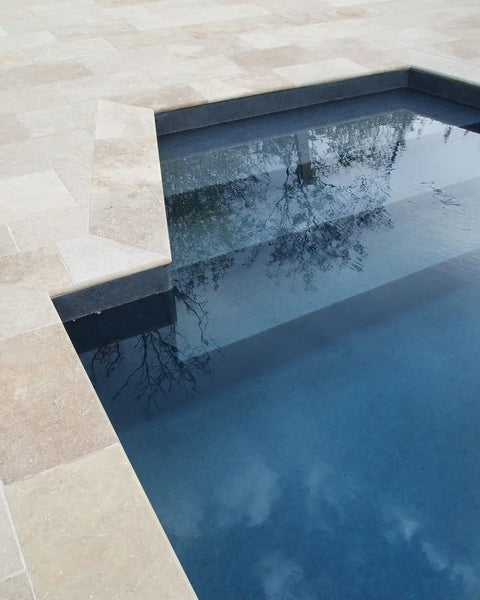
  1. Pleasant underfoot: soft, slightly textured or rougher, each stone has its own feel. It's a true sensation of material, particularly pleasant on a patio or around a pool.

  2. Good thermal inertia: generally thicker, stone heats up and cools down more gradually. Light-colored stones are particularly pleasant in summer, although color and exposure remain determining factors: a very dark stone will inevitably heat up in direct sunlight.

  3. The right finish in the right place: the same stone can be almost smooth or very rough depending on its finish. For outdoor use, we select just the right balance: enough grip to secure a patio or pool, without making the surface unnecessarily rough, unpleasant underfoot, or difficult to clean.
VIEW SELECTION →
Carrelage extérieur effet pierre AVIO - 60 x 60 x 2 cm Minéral pierre naturelle

Porcelain stoneware

Consistent comfort and measured performance

  1. Measured grip: The anti-slip level of the tiles is tested and clearly identified. For our outdoor spaces, we particularly favor R11, which offers high grip and is a level commonly used for demanding outdoor areas (municipal swimming pools, public buildings, etc.).

  2. A smooth and pleasant feel: The relief and texture are controlled across the entire surface. Manufacturers have made significant progress: new generations reproduce the textures of stone, wood, or concrete with great realism, while maintaining a smooth and comfortable feel, especially barefoot.

  3. More reactive to heat: With only 2 cm thickness, porcelain stoneware has less inertia than thick stone paving and can heat up faster in the sun. But color matters a lot: a beige or light-colored ceramic will remain much more comfortable in summer than a dark gray slab heavily exposed to the sun.
VIEW SELECTION →

🏆 VERDICT: natural stone wins


Its feel, natural relief, and thickness give it a particularly pleasant sensation underfoot and good inertia to temperature changes.

Porcelain stoneware remains excellent, with comfortable surfaces and, above all, measured and controlled grip, particularly with the R11 products that we favor for outdoor use.

6. Price

Cost of Purchase vs. Long-Term Value: Which Matters More?

Bodenplatte extérieur TRAVERTIN CLASSIC - Minéral Naturstein

NATURAL STONE

From €15 to over €150/sqm: it all depends on the stone

There is stone for almost every budget: some thin travertine starts at around €15/sqm, while the majority of our outdoor paving is between €40 and €100/sqm. Some rarer or more prestigious stones can go beyond that.


The price mainly depends on the material, origin, format, and thickness. A 1.2 cm slab obviously doesn't use as much stone as a 3 cm slab, and large formats or certain finishes also increase the cost.


Think about the project as a whole: stone allows you to create paving, coping, steps, cobblestones, or even custom-made pieces from the same material. A real advantage when you want to maintain continuity throughout the outdoor landscaping.


It's also a long-term investment: stone is a noble and timeless material, capable of lasting for decades and being renovated. A beautiful stone terrace permanently adds character to a house and is a real asset for the property.

VIEW SELECTION →
Außenfliesen in Betonoptik CHAMOIX – 2 cm – Minéral Naturstein

Porcelain stoneware

Prices vary greatly depending on the format

Before comparing prices, it's essential to compare equivalent products. Reduced thickness, limited decor options, or simpler finishes can result in more affordable porcelain stoneware. We, however, have chosen to work with renowned manufacturers and high-end 2 cm outdoor slabs, featuring characteristics and finishes suitable for durable outdoor use.

At this level of quality, prices are quite straightforward:

  • 60 × 60 cm: approximately €25 to €40/m² → the standard format, generally the most accessible.

  • 80 × 80, 90 × 60, 90 × 45 or 60 × 120 cm: around €50 to €60/m² → larger, but still very accessible.

  • 120 × 120 cm: around €70/m² → a spectacular format that would be much heavier and more costly to obtain in natural stone.

The chosen color or effect ultimately makes little difference: for a comparable range, it's mainly the slab dimension that drives up the price.

VIEW SELECTION →

💡 KEY TAKEAWAYS


Forget the idea that natural stone is necessarily expensive and porcelain stoneware necessarily economical: today, excellent solutions can be found in both categories for around €40 to €60/m².

For stone, the price primarily depends on the material, origin, thickness, and format; for porcelain stoneware, on the quality and especially the dimensions. Stone also retains its value over time, its timeless character, and the possibility of completing an entire outdoor project with the same material.

WHICH STONE TO CHOOSE FOR YOUR FLOOR?

Sockel Kalkstein SINAI PEARL sablé gebürstet Minéral Naturstein

LIMESTONE

The quintessential French stone, available from off-white and golden beige to grey. When aged, it recaptures the spirit of ancient floors; when softened or sanded, it becomes more refined.
Margelle TRAVERTIN MIX - Bords 1/2 rond - Minéral Naturstein

TRAVERTINE

Recognizable by its cavities and its cream, sand, or honey shades. An emblematic stone, it immediately brings warmth, light, and a Southern spirit.

BLUESTONE

A dense, grey-blue stone, punctuated by fossils and natural markings. Understated from afar, rich in detail up close: an authentic, deeply mineral floor.
Blockstufe Granit SILVERSAND - Minéral Naturstein

GRANITE

Granite combines exceptional strength with an elegant aesthetic, ideal for patios subject to heavy use.

Answers to your questions about natural stone for outdoor use?

1. Natural stone or porcelain stoneware: which to choose for a patio?

Both are perfectly suitable. Choose natural stone if you are primarily looking for an authentic material, texture, a beautiful patina, and a floor that gains character over time. Choose porcelain stoneware if you prefer large formats, a very controlled finish, and minimal maintenance.

There is no wrong choice: it all depends on the desired style and your priorities.

2. What material should you choose for around a pool?

Both are very suitable, provided you choose the right finish. For natural stone, we select finishes that offer sufficient grip without being unnecessarily rough underfoot. For porcelain stoneware, slip resistance is measured and clearly identified; we particularly favor R11 products for our outdoor spaces.

Stone also offers a particularly pleasant natural feel, while stoneware is extremely easy to maintain.

3. Is natural stone really frost-resistant?

Yes, provided you choose a suitable stone. There are thousands of natural stones, and not all of them behave the same way outdoors.

This is precisely an essential part of our selection process: we do not offer the same stones for an outdoor patio as for an indoor floor. For outdoor use, frost resistance and the stone's behavior in the face of bad weather and temperature variations are among the essential criteria.

4. Which material heats up the least in the sun?

There is no universal answer: color, exposure, finish, and thickness are extremely important. A light beige slab will generally be much more comfortable barefoot than an anthracite slab exposed to full sun, whether it is made of stone or porcelain stoneware.

Natural stone, generally thicker, however, has more inertia and heats up and cools down more gradually.

5. Natural stone or porcelain stoneware: which is less slippery when wet?

It all depends on the chosen surface. The same natural stone can be almost smooth or very rough depending on its finish. Our job is therefore to offer finishes for outdoor use that are adapted to the application: non-slip, but not unnecessarily aggressive underfoot.

For porcelain stoneware, the advantage is that this performance is measured and classified, which makes it possible to know precisely the level of grip of the product.

6. What does an R11 anti-slip rating mean for outdoor tiles?

The R classification assesses the slip resistance of shod tiles. An R11 product offers a high level of grip, suitable for outdoor floors and commonly selected for demanding projects.

Simply put: you don't need to become an expert on the standard. R11 is an excellent benchmark for choosing outdoor tiles that offer good grip. Mirage also indicates that its outdoor surfaces must have a level higher than R10.

7. Can you clean a natural stone patio with a pressure washer?

Yes, but with more precautions than with porcelain stoneware. Avoid excessive pressure, maintain a distance, and especially do not focus on the joints or a stone with a textured, raised surface.

In most cases, it's not even necessary to use a high-pressure cleaner: a jet of water and a good stiff brush are sufficient for routine maintenance.

8. Is it mandatory to apply a water repellent to natural stone?

Not systematically. It depends on the stone, its exposure, and especially on how the patio is used.

In areas particularly exposed to stains — barbecue, outdoor kitchen, dining area, fruit trees — a water repellent may be useful to limit absorption and facilitate cleaning. In other situations, it is not necessarily essential.

9. Can natural stone and porcelain stoneware be laid on pedestals?

2 cm outdoor porcelain stoneware is particularly suitable for installation on pedestals, provided that the product is designed for this use.

For natural stone, this is also possible with certain stones and certain thicknesses, but not with any paving. The installation method must therefore be taken into account when choosing the product.

10. What thickness should I choose for an outdoor patio?

It depends mainly on the material and the intended installation method.

For natural stone, 1.2 to 1.5 cm may be suitable for glued installation on a concrete slab under certain conditions; 2 cm provides more comfort and stability; 3 cm offers even more versatility and, depending on the stone, allows for other installation methods.

For porcelain stoneware, 2 cm is currently the standard thickness for outdoor slabs, particularly to allow for various installation solutions.

11. Can a broken slab be easily replaced several years after installation?

Yes, provided you have kept a few tiles. And that's precisely why we recommend always keeping a small surplus after the project.

For porcelain stoneware, a collection may eventually disappear or evolve. For natural stone, the material will continue to exist, but a new shipment may have different shades since each extraction is unique. In both cases, a few tiles kept dry can greatly simplify your life ten years later.

12. Which material has the longest lifespan?

Both can last for several decades when properly chosen and installed.

The difference lies more in how they age. Porcelain stoneware maintains an appearance close to its original state for a very long time. Natural stone develops a patina and has the advantage of often being able to be deep cleaned, restored, sanded, or renovated rather than replaced.

13. Is natural stone more environmentally friendly than porcelain stoneware?

Natural stone has an obvious advantage: the material already exists in nature. After extraction, it is primarily cut and shaped, with relatively limited industrial processing and no use of chemicals whatsoever. It is durable, reusable, and recyclable.

Porcelain stoneware requires more processing and firing at very high temperatures — above 1,250°C — but the industry has made tremendous progress: recycling production waste, emission control, and environmental certifications are now part of the most advanced manufacturers' approaches.

Nevertheless, it is necessary to consider the entire lifecycle, including the material's origin, its transportation, and especially its lifespan.

14. Natural Stone vs. Porcelain Stoneware: Which Adds More Value to a Home?

While both can result in a beautiful patio, natural stone has a particular advantage in terms of character and perceived value.

It is a noble and timeless material, used in architecture for centuries. A patio, coping, steps, or paving made from the same stone can become an integral part of the house rather than just a simple floor covering. It is also a material that develops a patina and can be renovated rather than simply following trends.

15. Are color variations between tiles normal?

Yes – and not just with natural stone.

With natural stone, variations in shade, veining, fossils, and texture are inherent to the material: no two slabs are exactly alike. It is therefore important to mix slabs from multiple pallets during installation to distribute the shades harmoniously.

For porcelain stoneware, these variations are deliberately created to avoid a repetitive effect. Some collections offer dozens of different designs and may also show color variations from one tile to another. Here too, mixing boxes during installation helps achieve the most natural result.